




Technical Specifications, Performance Validation & Installation Insight
Building on foundational engineering principles, deeper technical distinctions must now be examined. Greater clarity is achieved when structural design, thermal efficiency, and real-world braking metrics are analyzed in detail. The Brembo braking system is engineered not only for performance enhancement but also for measurable, validated superiority.
Technical Specifications of the Brembo Braking System
Precision engineering standards are applied across every major component. Because dimensional tolerances are tightly controlled, optimal system balance is achieved.
Caliper Specifications
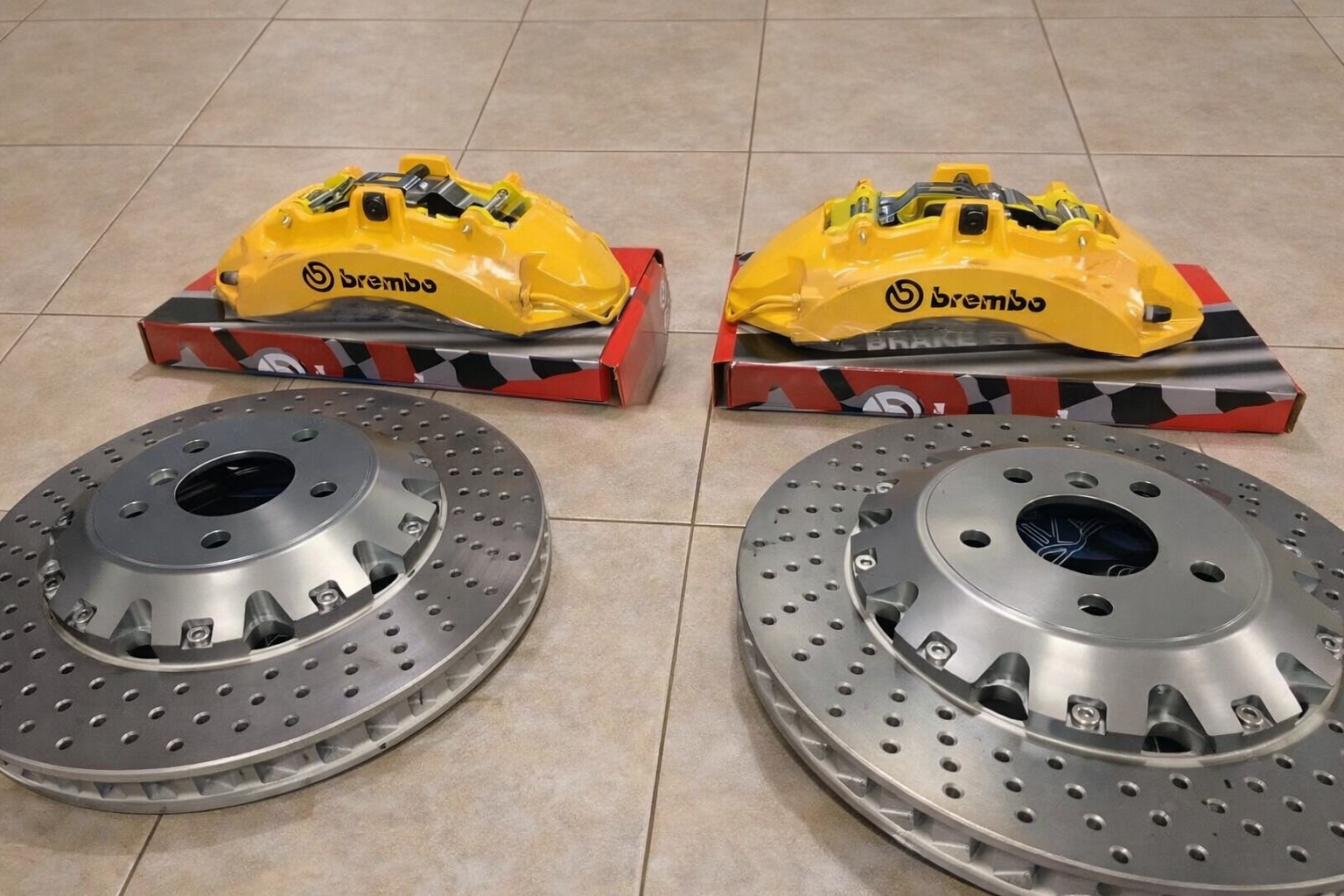
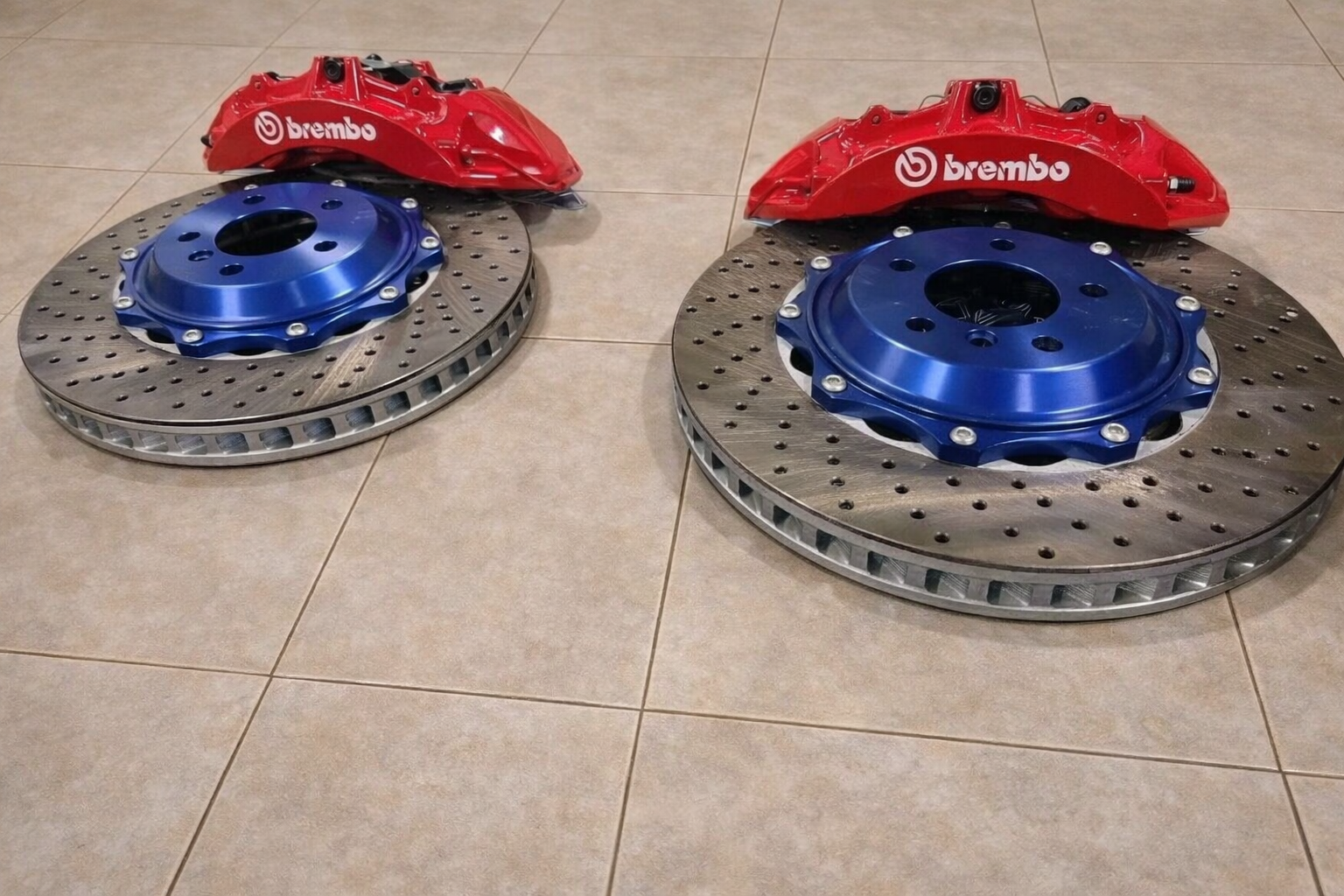
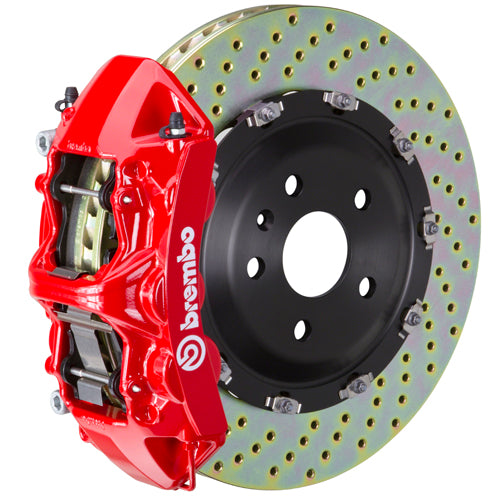
Multi-piston configurations are strategically utilized to distribute hydraulic pressure evenly. In most performance variants, 4-piston, 6-piston, or even 8-piston calipers are implemented. As a result, clamping force is delivered uniformly across the brake pad surface.
Key structural attributes include:
-
Forged or monoblock aluminum construction
-
High-temperature piston seals
-
Stainless steel or coated pistons for corrosion resistance
-
Integrated dust boots for longevity
-
Precision CNC machining for tight tolerances
Because structural flex is minimized, pedal feedback remains consistent even under high-load braking.
Rotor Engineering Data
Rotor diameter and thickness are engineered based on vehicle mass, power output, and intended driving style. Larger rotor diameters increase braking torque leverage. Therefore, stopping distances are reduced without excessive pedal pressure.
Common rotor characteristics include:
-
High-carbon cast iron composition
-
Directional internal ventilation vanes
-
Cross-drilled or slotted surface treatments
-
Floating rotor assemblies (in advanced kits)
-
Anti-corrosion coating on non-friction surfaces
As thermal expansion is accommodated through floating designs, structural stress is reduced. Consequently, long-term reliability is enhanced.
Performance Testing & Measurable Results
Quantifiable improvements are consistently documented during controlled testing. Under identical environmental conditions, vehicles equipped with a Brembo braking system frequently demonstrate shorter stopping distances compared to conventional OEM systems.
Fade Resistance Validation
Repeated high-speed braking cycles are simulated to measure thermal endurance. Because directional airflow technology dissipates heat efficiently, braking torque remains stable across multiple consecutive stops.
Furthermore, temperature recovery times are reduced. As a result, system consistency is maintained even when subjected to track-level stress.
Pedal Modulation & Hydraulic Response
Hydraulic system calibration is engineered to maintain linear pressure progression. Unlike some factory systems where pedal softness may occur during extreme braking, structural rigidity within Brembo calipers preserves response accuracy.
Therefore, braking input can be modulated with greater precision. This is particularly valuable during emergency maneuvers and high-performance driving scenarios.
Brembo Braking System vs Factory Brake Systems
Clear differentiation is observed when technical comparisons are conducted.
Clamping Efficiency
Standard single-piston calipers may apply uneven pressure distribution. Conversely, multi-piston configurations within the Brembo braking system ensure symmetrical pad engagement. Consequently, friction optimization is achieved.
Thermal Stability
OEM systems often rely on passive cooling alone. However, Brembo rotor designs incorporate active airflow channeling. As heat is evacuated more efficiently, brake fade is significantly reduced.
Durability & Wear Patterns
Uneven pad wear is commonly observed in lower-cost systems. Because force distribution is balanced within Brembo assemblies, wear patterns remain more uniform. Therefore, maintenance intervals may be optimized.
Installation & Vehicle Compatibility
Seamless integration is prioritized to ensure safety and reliability.
Vehicle-Specific Engineering
Mounting brackets are precision-machined to align with factory hub assemblies. As dimensional accuracy is maintained, installation complexity is minimized.
In most upgrade kits, the following components are included:
-
Calipers (pre-assembled)
-
Performance rotors
-
Matched brake pads
-
Stainless steel braided brake lines
-
Mounting hardware
-
Installation documentation
Because compatibility with factory ABS and electronic stability systems is engineered into the design, advanced safety features remain fully functional.
Weight Optimization & Handling Impact
Unsprung mass plays a critical role in vehicle dynamics. Lightweight aluminum calipers are incorporated to reduce rotational inertia. Consequently, suspension responsiveness is improved.
As weight distribution becomes more balanced, steering precision and cornering stability are enhanced. Therefore, braking upgrades indirectly contribute to overall handling performance.
Applications Across Driving Environments
The Brembo braking system is engineered to support a broad range of use cases:
-
Daily commuting and urban driving
-
Highway performance and touring
-
Electric vehicle regenerative braking integration
-
Performance street builds
-
Track-day applications
-
Competitive motorsport environments
Because system configurations are scalable, inclusive performance solutions are accessible to drivers across diverse automotive categories.
Long-Term Value & Ownership Benefits
Durability is reinforced through protective coatings, high-temperature seals, and advanced metallurgy. As corrosion resistance is strengthened, system lifespan is extended.
Additionally, uniform pad wear and optimized rotor integrity contribute to predictable maintenance planning. Therefore, long-term ownership costs may be managed more efficiently compared to lower-grade braking systems.
Conversion-Focused Performance Summary
Selecting a Brembo braking system represents a performance-driven investment rather than a simple cosmetic modification. Through advanced materials science, precision machining, and thermally optimized rotor design, reliable stopping power is consistently delivered.
Moreover, driver confidence is elevated with every braking event. Because safety margins are increased and pedal response remains predictable, control becomes more intuitive and empowering.
The Brembo braking system is engineered for individuals who value performance, reliability, and inclusive accessibility in equal measure.
Motorsport Proven Performance
Competitive racing environments demand absolute consistency under extreme stress. Because braking systems are exposed to repeated high-temperature cycles, only advanced materials and precision engineering can withstand sustained load.


Across elite championships such as Formula 1, 24 Hours of Le Mans, and MotoGP, Brembo systems have been extensively utilized. Lessons from these extreme racing conditions are translated into production-level braking components.
Therefore, performance gains achieved on the track are adapted for everyday vehicles. As a result, consistent deceleration, fade resistance, and structural durability are delivered beyond theoretical specifications.
Carbon-Ceramic Innovation & Advanced Materials
Material science plays a decisive role in braking excellence. Carbon-ceramic disc technology has been engineered to reduce weight while dramatically increasing heat tolerance. Because operating temperatures can exceed conventional rotor thresholds during aggressive driving, advanced composites are implemented to maintain structural stability.
Consequently, braking torque remains consistent even when thermal stress intensifies. Additionally, unsprung mass is significantly reduced. As weight savings accumulate, suspension responsiveness and handling precision are enhanced.
Global Brand Authority & OEM Partnerships
Industry credibility is reinforced through partnerships with leading automotive manufacturers. The Brembo braking system is frequently installed as original equipment on high-performance vehicles and luxury performance platforms.
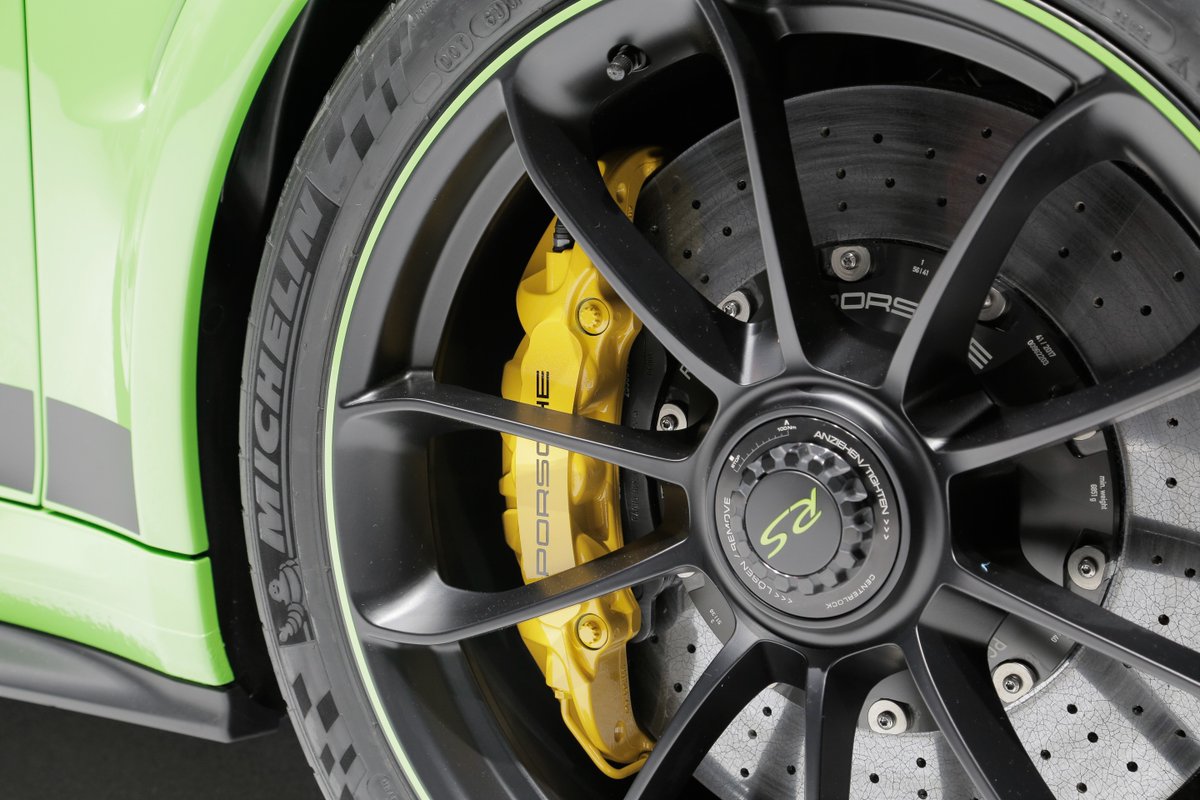

Performance vehicles from manufacturers such as Ferrari, Porsche, and Lamborghini are commonly equipped with Brembo braking technology.
Because OEM validation standards are rigorous, system durability and integration reliability are thoroughly tested before approval. Therefore, consumers benefit from manufacturer-backed engineering excellence.
Aesthetic Identity & Performance Recognition
Visual presence often reflects underlying performance capability. Signature red calipers have become synonymous with high-performance braking. Because design consistency reinforces brand recognition, vehicles equipped with a Brembo braking system are frequently associated with premium engineering.
Moreover, caliper finishes are available in multiple colors and custom configurations. As personalization options expand, drivers across diverse preferences and vehicle styles are supported.
Sustainability & Responsible Engineering
Environmental responsibility is increasingly integrated into automotive innovation. Production processes are optimized to reduce waste and improve material efficiency. Additionally, recyclable components are prioritized where technically feasible.
Because performance and sustainability are balanced, the Brembo braking system reflects forward-thinking engineering standards that align with evolving industry expectations.
Industry Applications Beyond Passenger Vehicles
While high-performance road cars receive significant attention, braking demands extend far beyond sports applications. The Brembo braking system has been adapted for:
-
Electric vehicles requiring regenerative integration
-
Heavy-performance SUVs
-
Motorsport prototypes
-
Performance motorcycles
-
Commercial specialty vehicles
As electrification trends accelerate, braking systems must harmonize with regenerative technologies. Therefore, integration strategies are engineered to ensure compatibility with hybrid and EV platforms.
Research & Development Commitment
Continuous innovation is sustained through dedicated research facilities and advanced testing laboratories. Computational fluid dynamics, stress simulation modeling, and high-speed thermal analysis are utilized to refine each generation of components.
Because development cycles are data-driven, incremental performance improvements are consistently achieved. Consequently, the Brembo braking system remains aligned with evolving vehicle performance benchmarks.
Trust Through Engineering Transparency
Braking performance should never be ambiguous. Technical data, validated testing results, and OEM collaborations provide measurable proof of capability. Therefore, consumer confidence is strengthened through transparency and documented engineering validation.
As informed purchasing decisions are encouraged, inclusive access to accurate performance information is supported for all drivers.
Frequently Asked Questions (FAQ) – Brembo Braking System
Clarity builds confidence when performance components are selected. Below, the most frequently asked questions about the Brembo braking system are answered in detail to support informed decision-making and long-term satisfaction.
General Questions About the Brembo Braking System
What is a Brembo braking system?
A Brembo braking system is a high-performance brake solution engineered by Brembo. Advanced multi-piston calipers, thermally optimized rotors, and precisely formulated brake pads are integrated to deliver superior stopping power, fade resistance, and pedal modulation.
Because motorsport data informs product development, consistent braking torque is maintained under both daily and high-stress driving conditions.
Is a Brembo braking system better than standard factory brakes?
Performance improvements are typically observed when compared to standard OEM systems. Multi-piston calipers distribute clamping force more evenly; therefore, braking efficiency is increased.
Additionally, advanced ventilation designs improve heat dissipation. As a result, fade resistance is significantly enhanced during repeated braking events.
However, suitability ultimately depends on vehicle type, driving style, and performance expectations.
Are Brembo brakes only for sports cars?
High-performance vehicles often feature Brembo systems; however, inclusive configurations are engineered for diverse applications. Sedans, SUVs, electric vehicles, and daily commuter platforms can also be equipped with compatible upgrade kits.
Because braking demands vary across vehicle categories, scalable system options are developed to match specific use cases.
Performance & Technical Questions
How much shorter is the stopping distance with a Brembo braking system?
Stopping distance improvements depend on vehicle weight, tire condition, road surface, and driving speed. Controlled testing frequently demonstrates measurable reductions in braking distance when compared to conventional systems.
As clamping force distribution improves and thermal stability is enhanced, deceleration efficiency becomes more consistent.
Do Brembo brakes reduce brake fade?
Yes. Directional internal vane designs, high-carbon rotor materials, and optimized pad compounds are engineered to dissipate heat efficiently. Consequently, brake fade is significantly reduced during repeated high-speed braking cycles.
Because heat management is prioritized, consistent braking torque is preserved even under demanding conditions.
What is the difference between drilled and slotted rotors?
-
Drilled rotors are engineered to release gases and disperse water in wet conditions.
-
Slotted rotors are designed to clear debris and maintain consistent pad contact.
In certain configurations, both features are combined. Therefore, braking performance is optimized for diverse environments.Brembo high-performance brake system
Are carbon-ceramic Brembo systems worth it?
Carbon-ceramic variants provide substantial weight reduction and extreme heat tolerance. As operating temperature capacity increases, performance remains stable under track-level stress.
However, higher initial investment and specialized maintenance requirements should be considered. For aggressive performance applications, long-term value may justify the upgrade.
Installation & Compatibility
Can a Brembo braking system be installed on any vehicle?
Vehicle-specific kits are engineered to match precise mounting dimensions and hydraulic requirements. Because compatibility varies, fitment must be verified before purchase.
Professional installation is strongly recommended to ensure safety and proper system calibration.
Will Brembo brakes work with ABS and traction control systems?
Yes. Upgrade kits are engineered to integrate with factory electronic systems. Hydraulic balance is maintained so that ABS, stability control, and traction control continue functioning as intended.Brembo braking system vs OEM brakes
Because system harmony is preserved, safety features remain fully operational.
How long does installation take?
Installation time depends on vehicle complexity and technician experience. In most cases, a full upgrade may require several hours.
Because precise torque specifications and brake bleeding procedures must be followed, professional installation ensures optimal results.Brembo big brake kit
Maintenance & Longevity
How long do Brembo brake pads and rotors last?
Service life depends on driving habits, environmental exposure, and usage intensity. Uniform pressure distribution within multi-piston calipers often promotes more even pad wear.Brembo brake upgrade for SUVs
Consequently, maintenance intervals may be predictable and optimized compared to lower-grade systems.
Are Brembo brakes noisy?
Performance brake systems may generate slightly more audible engagement under aggressive driving. However, street-oriented pad compounds are formulated to minimize noise.
Because compound selection impacts sound levels, choosing the appropriate configuration is important.
Do Brembo brakes produce more dust?
High-friction pad compounds can generate brake dust, particularly in performance configurations. Nevertheless, low-dust options are available for drivers prioritizing cleanliness.
Therefore, system customization supports diverse user preferences.
Cost & Value Considerations
Are Brembo braking systems expensive?
Premium materials, precision manufacturing, and motorsport-derived engineering contribute to higher upfront costs. However, long-term durability, fade resistance, and performance gains often justify the investment.
Because braking performance directly affects safety and vehicle control, many drivers consider the value proposition favorable.
Is upgrading to a Brembo braking system worth it for daily driving?
For daily drivers seeking enhanced safety margins and improved pedal feel, measurable benefits can be experienced. Although track performance may not be required, improved responsiveness and reduced fade still provide practical advantages.
As braking confidence increases, overall driving comfort is elevated.




Reviews
There are no reviews yet.