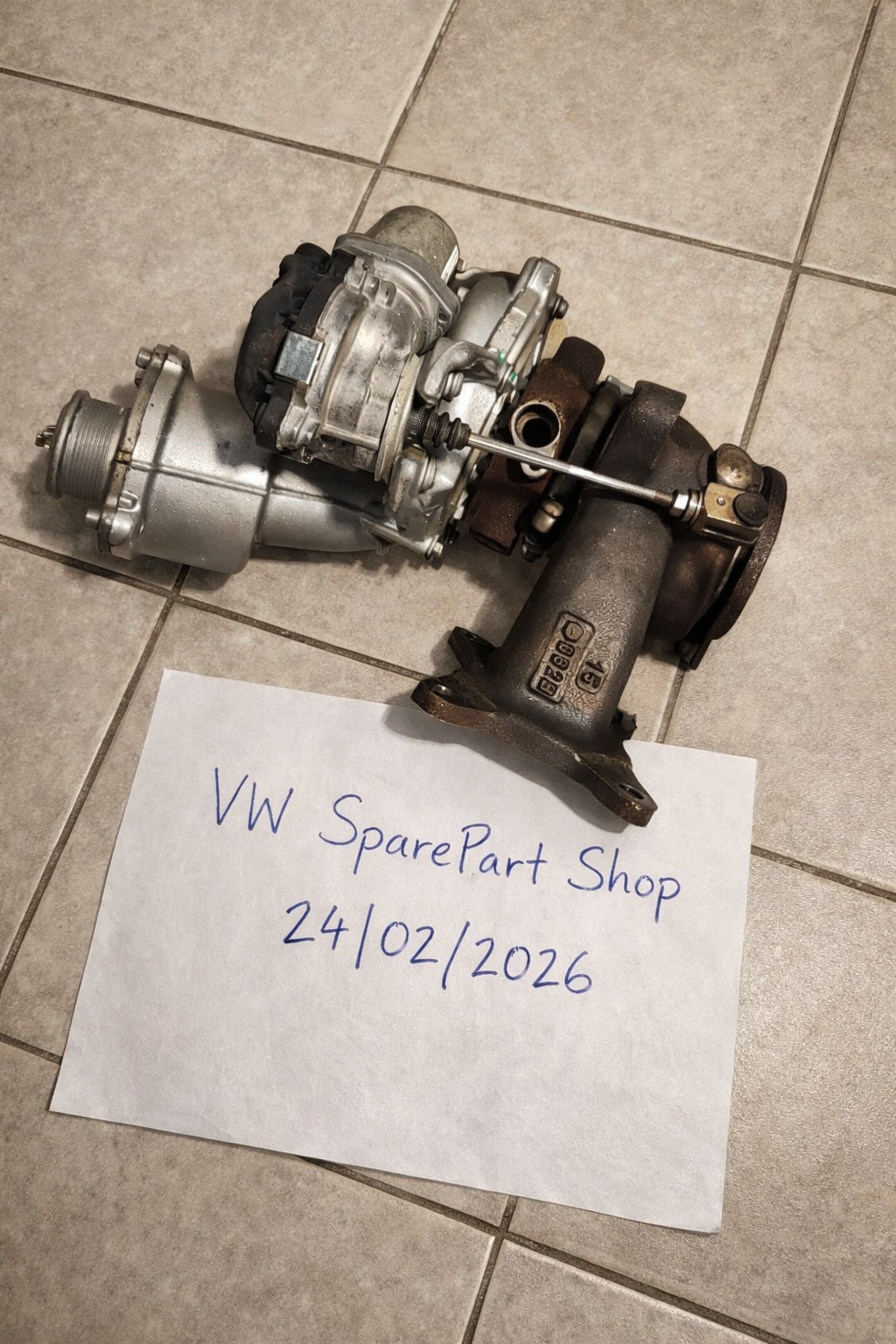
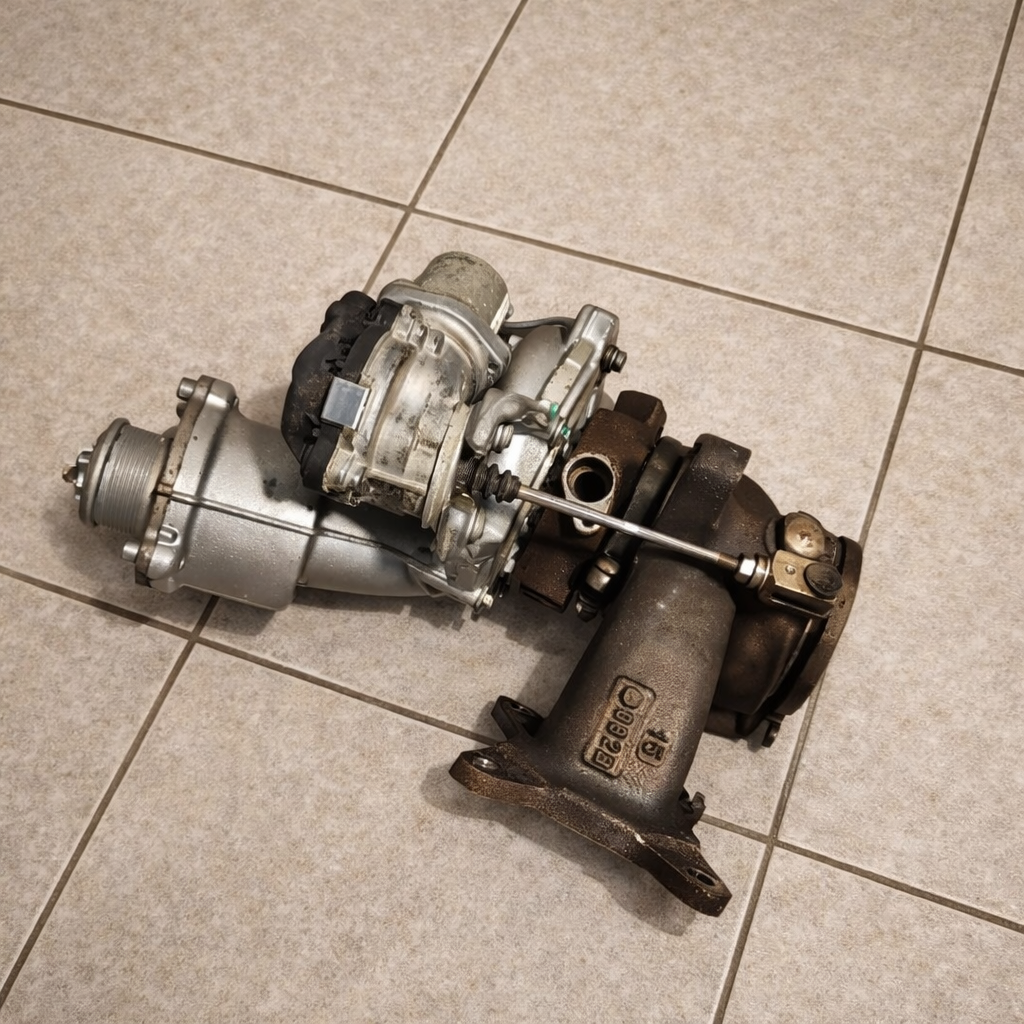
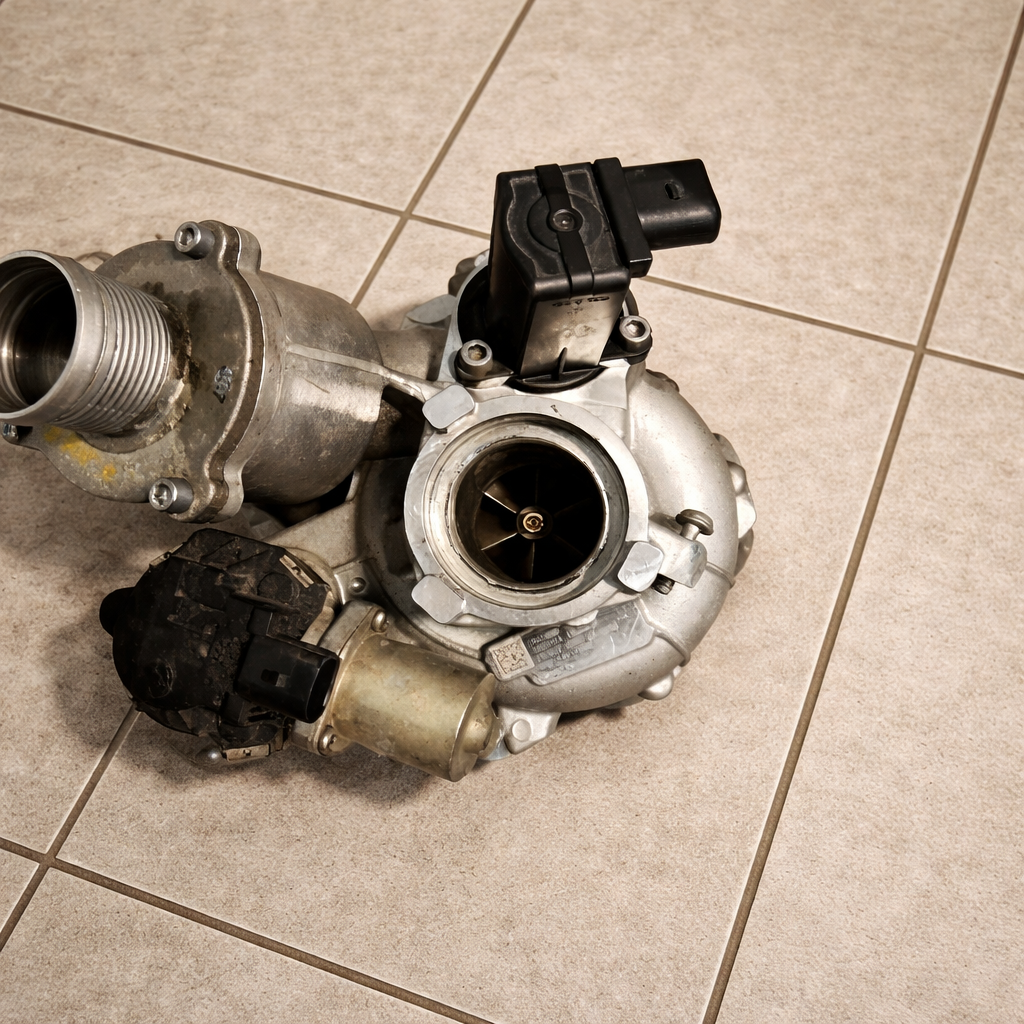
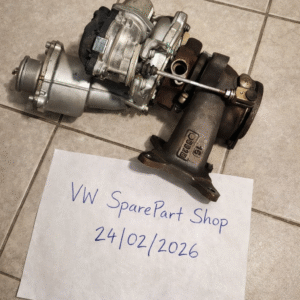
Volkswagen Golf IHI IS20 turbocharger
€450.00
Description
Volkswagen Golf IHI IS20 Turbocharger – Precision-Engineered Performance Upgrade
Power delivery defines the modern turbocharged driving experience. Boost response transforms how acceleration feels behind the wheel. Efficiency determines how performance is sustained over time.
The Volkswagen Golf IHI IS20 turbocharger is engineered to elevate all three dimensions simultaneously. Designed for select MQB-platform vehicles produced by Volkswagen, this turbocharger represents a factory-developed performance solution that blends OEM reliability with measurable power gains.
Enthusiasts seeking responsive acceleration, daily drivability, and long-term durability often prioritize turbocharger selection as the foundation of their build. Consequently, the IHI IS20 has become one of the most trusted upgrade paths within the EA888 Gen 3 ecosystem. Balanced airflow characteristics are delivered. Mid-range torque is enhanced. Thermal efficiency is preserved.
Inclusive performance matters. Whether you are an experienced tuner, a weekend DIY builder, or someone exploring your first performance modification, the Volkswagen Golf IHI IS20 turbocharger is engineered to support a wide range of goals and skill levels.
Understanding the Volkswagen Golf IHI IS20 Turbocharger
What Is the IHI IS20?
Factory-engineered turbocharging technology powers modern performance vehicles. Within the EA888 Gen 3 engine family, the IHI IS20 turbocharger serves as a high-efficiency forced-induction unit designed to optimize airflow and combustion performance.
Exhaust gases are routed through a precision-cast turbine housing. Rotational energy is generated. Intake air is compressed before entering the combustion chamber. As a result, higher air density is achieved, allowing more fuel to be burned efficiently and safely.
Because optimized turbine sizing is utilized, rapid spool characteristics are supported. Therefore, boost pressure builds quickly at lower RPM ranges. Throttle response is sharpened. Daily drivability is maintained.
Why the Volkswagen Golf IHI IS20 Turbocharger Is So Popular
Performance upgrades are often evaluated based on three core criteria:
-
Reliability
-
Power potential
-
Installation complexity
The Volkswagen Golf IHI IS20 turbocharger consistently ranks highly across all three categories.
OEM fitment standards are retained. Electronic wastegate integration is supported. Factory oil and coolant routing are preserved. Consequently, installation remains straightforward while reliability expectations are upheld.
Moreover, airflow capacity exceeds that of lower-tier stock turbochargers commonly found in entry-level trims. Because of this, noticeable horsepower and torque improvements can be achieved when paired with proper ECU calibration.
Core Performance Advantages
Enhanced Airflow Efficiency
Airflow determines combustion quality. Combustion quality determines power output. Therefore, compressor wheel geometry and turbine housing design are critical engineering considerations.
Within the IS20 turbocharger:
-
Compressor blades are precision-balanced
-
Airflow turbulence is minimized
-
Boost consistency is improved
-
Thermal stability is reinforced
As airflow efficiency increases, smoother acceleration is experienced across the RPM band. Furthermore, mid-range torque delivery becomes more immediate, improving real-world drivability.
Faster Spool, Stronger Mid-Range
Turbo lag can diminish driving engagement. Oversized turbochargers may produce high peak power but sacrifice responsiveness. The IS20 strikes a carefully engineered balance.
Because moderate turbine sizing is implemented:
-
Boost onset occurs earlier
-
Power builds progressively
-
Throttle transitions feel natural
-
Urban drivability remains comfortable
Acceleration confidence is strengthened. Overtaking performance is improved. Everyday commuting remains refined.
OEM Engineering Integrity
Designed for Platform Compatibility
Fitment precision reduces installation risk. The Volkswagen Golf IHI IS20 turbocharger is engineered to align with factory mounting points and hardware specifications on compatible EA888 Gen 3 applications.
As a result:
-
Fabrication is not required
-
Sensor connections remain intact
-
Actuator communication is supported
-
Serviceability is maintained
Consistency in installation promotes long-term reliability. Factory-calibrated tolerances are preserved.
Integrated Electronic Wastegate Actuation
Boost regulation is managed electronically within the IS20 platform. Precise control over boost pressure is achieved. ECU communication is maintained.
Therefore:
-
Boost curves remain predictable
-
Overboost risks are minimized
-
Tuning adjustments can be calibrated accurately
-
Driveability under partial throttle remains smooth
Electronic control contributes to refined performance delivery that supports both stock and tuned applications.
Who Should Consider the Volkswagen Golf IHI IS20 Turbocharger?
Performance upgrades are not one-size-fits-all. However, the IS20 platform supports a broad spectrum of drivers.
Ideal For:
-
Drivers upgrading from smaller factory turbochargers
-
Owners pursuing Stage 1 or Stage 2 tuning
-
Individuals seeking OEM reliability with added performance
-
Enthusiasts wanting a balanced daily-driver setup
-
Builders planning incremental future upgrades
Because scalability is supported, additional bolt-on components such as intercoolers, downpipes, and intake systems can be integrated over time.
Technical Foundation: Key Specifications
Detailed understanding improves purchasing confidence. Below are the core engineering parameters of the Volkswagen Golf IHI IS20 turbocharger:
Turbocharger Architecture:
-
Turbo Model: IHI IS20
-
Bearing Type: Journal Bearing
-
Cooling System: Oil & Coolant Cooled
-
Wastegate: Electronic Actuator
-
Housing Material: High-Temperature Cast Alloy
-
Compressor Housing: Lightweight Cast Aluminum
-
Application Platform: EA888 Gen 3 Compatible
Precision balancing is performed to minimize vibration under load. Rotational stability is preserved across the boost range. Consequently, operational longevity is supported.
Performance Dynamics, Tuning Strategy & Upgrade Path
Volkswagen Golf IHI IS20 Turbocharger – Technical Deep Dive
Engineering precision defines how forced induction performs under load. Air density determines combustion efficiency. Thermal control safeguards long-term reliability.
The Volkswagen Golf IHI IS20 turbocharger builds upon OEM-calibrated architecture while unlocking measurable performance gains across the powerband. In this section, airflow science, tuning scalability, and real-world upgrade strategies are examined in detail to support informed decision-making.
Airflow Dynamics & Boost Characteristics
Compressor Efficiency & Charge Density
Compressed intake air must remain stable and consistent for optimal combustion. Within the IS20 design, compressor wheel geometry is optimized for balanced airflow rather than extreme peak output.
As rotational speed increases:
-
Air mass flow is increased
-
Intake charge density is improved
-
Combustion stability is enhanced
-
Throttle modulation becomes more predictable
Because compressor efficiency remains within a well-calibrated map range, drivability is preserved. Consequently, torque delivery feels progressive rather than abrupt.
Furthermore, surge conditions are minimized when proper ECU calibration is applied. Airflow stability therefore supports both stock-like smoothness and tuned responsiveness.
Turbine Response & Spool Behavior
Exhaust energy is converted into rotational motion through the turbine assembly. Turbine housing sizing directly influences spool time and boost threshold.
Moderate turbine geometry is utilized in the Volkswagen Golf IHI IS20 turbocharger. As a result:
-
Boost onset typically occurs in lower RPM ranges
-
Lag is reduced compared to larger-frame turbos
-
Mid-range torque builds rapidly
-
Urban driving remains comfortable
Unlike oversized turbochargers that prioritize top-end power, the IS20 emphasizes usable power across the RPM spectrum. Acceleration confidence is strengthened in real-world driving conditions such as merging, overtaking, and corner exits.
Real-World Power Potential
Expected Output with ECU Calibration
Performance outcomes depend on supporting hardware, fuel quality, and tuning strategy. However, measurable gains are commonly achieved when the IS20 is paired with professional ECU calibration.
When properly tuned:
-
Horsepower increases are realized across the mid-range
-
Torque gains are noticeable under partial throttle
-
Acceleration metrics improve significantly
-
Throttle response sharpens
Because airflow capacity exceeds smaller factory turbochargers, additional headroom is created for optimized ignition timing and boost control.
Importantly, safe tuning parameters must be maintained. Air-fuel ratios should be monitored. Knock correction values should be logged. Boost targets must align with fuel system capabilities.
Stage Compatibility & Upgrade Scaling
Stage 1 Applications
Factory hardware is largely retained at Stage 1. ECU software recalibration is introduced to optimize boost pressure and ignition timing.
With the Volkswagen Golf IHI IS20 turbocharger:
-
Boost curves remain smooth
-
Torque delivery increases without sacrificing refinement
-
Stock fueling systems typically remain sufficient
Stage 1 setups prioritize balance. Daily reliability is preserved while noticeable power improvements are delivered.
Stage 2 Configurations
Supporting airflow modifications are introduced at Stage 2. Exhaust restriction is reduced. Charge temperatures are better controlled.
Recommended components include:
-
High-flow downpipe
-
Upgraded intercooler
-
Performance intake system
-
Colder-range spark plugs
As restriction is reduced, turbo efficiency improves. Consequently, sustained boost pressure becomes more consistent. Thermal stress is reduced during extended spirited driving.
Supporting Modifications for Optimal Results
Power gains are not achieved through turbo upgrades alone. A holistic approach produces the best outcomes.
Intercooler Upgrades
Compressed air generates heat. Heat reduces density. Reduced density lowers power potential.
An upgraded intercooler:
-
Lowers intake air temperatures
-
Improves combustion efficiency
-
Reduces knock risk
-
Supports consistent performance
Because thermal stability improves, repeatable performance can be achieved during back-to-back acceleration pulls.
Exhaust Flow Optimization
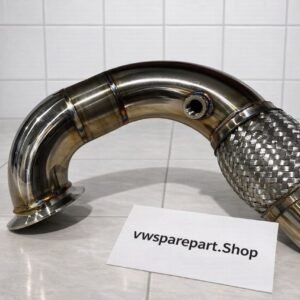
Exhaust backpressure limits turbine efficiency. A high-flow downpipe reduces restriction.
Benefits include:
-
Faster spool characteristics
-
Improved boost stability
-
Reduced turbine stress
-
Enhanced exhaust note
However, emissions compliance regulations vary by region. Local legal requirements should always be reviewed before installation.
Reliability Engineering & Thermal Management
Oil & Coolant Integration
The IS20 turbocharger incorporates both oil and coolant pathways. Lubrication reduces bearing wear. Coolant flow stabilizes housing temperatures.
As a result:
-
Bearing longevity is supported
-
Heat soak is mitigated
-
Shaft play risk is minimized
-
Turbo lifespan is extended
Regular oil maintenance remains essential. High-quality synthetic oil is recommended for turbocharged engines.
Journal Bearing System
A journal bearing assembly is utilized within the Volkswagen Golf IHI IS20 turbocharger. While ball-bearing systems are sometimes associated with extreme performance builds, journal bearings provide proven durability and cost-effective serviceability.
Because friction surfaces are continuously lubricated:
-
Rotational smoothness is preserved
-
Maintenance intervals remain predictable
-
OEM reliability standards are maintained
Balanced engineering prioritizes long-term consistency rather than aggressive peak output.
Comparative Positioning Within the MQB Ecosystem
Within the MQB tuning landscape, multiple turbocharger options exist. Smaller factory turbos prioritize fuel efficiency. Larger aftermarket units target maximum horsepower.
The IS20 occupies a strategic middle ground.
Compared to base-model turbochargers:
-
Airflow capacity is increased
-
Torque curves are broader
-
Power ceiling is elevated
Compared to larger hybrid turbos:
-
Spool response is quicker
-
Installation complexity is lower
-
Cost efficiency is improved
-
Daily drivability is enhanced
Because compromise is minimized, the IS20 remains one of the most popular OEM-based upgrades for performance-focused drivers.
Inclusive Performance & Driver Confidence
Performance enhancement should feel accessible rather than intimidating. The Volkswagen Golf IHI IS20 turbocharger supports:
-
First-time performance upgrades
-
Experienced tuning builds
-
Daily commuting reliability
-
Weekend spirited driving
No matter your background or experience level, measurable gains can be achieved when proper installation and calibration procedures are followed.
Transparent information supports informed decisions. Responsible tuning practices promote safe operation. Confidence is strengthened when engineering fundamentals are respected.
Installation, Maintenance, Buyer Confidence & Conversion Focus
Volkswagen Golf IHI IS20 Turbocharger – Ownership, Longevity & Purchase Assurance
Proper installation determines performance consistency. Preventative maintenance protects long-term reliability. Informed purchasing decisions eliminate uncertainty.
The Volkswagen Golf IHI IS20 turbocharger is engineered for precision integration, scalable performance, and dependable operation. This final section outlines installation protocols, lifecycle care, ownership benefits, and conversion-driven buying assurance so every customer can move forward confidently.
Professional Installation Best Practices
Pre-Installation Preparation
Component integrity should always be verified before installation. Oil passages must be inspected. Gaskets should be replaced. Fresh hardware is strongly recommended.
Before mounting the Volkswagen Golf IHI IS20 turbocharger:
-
Engine oil should be changed
-
Coolant levels must be drained appropriately
-
Oil feed and return lines must be inspected
-
Intake and exhaust mating surfaces should be cleaned
Contaminants are one of the leading causes of premature turbo failure. Therefore, cleanliness is essential.
Turbo Priming Procedure
Dry starts damage bearings. Oil starvation accelerates wear. Consequently, turbo priming is mandatory.
Before first ignition:
-
Oil should be manually introduced into the turbo oil inlet.
-
The engine should be cranked without ignition to build oil pressure.
-
Boost should not be applied immediately after startup.
Controlled lubrication ensures bearing surfaces are properly coated prior to load application.
Post-Installation Calibration
ECU Optimization
Factory calibration may not fully optimize the airflow capacity of the IS20. Professional ECU tuning is strongly recommended.
Benefits of proper calibration include:
-
Balanced air-fuel ratios
-
Optimized ignition timing
-
Controlled boost targets
-
Reduced knock correction events
Because airflow volume increases, recalibration aligns fueling and boost management accordingly.
Safe power is sustainable power.
Maintenance Strategy for Long-Term Reliability
Oil Change Intervals
Turbocharged engines demand consistent lubrication quality. High-temperature operation places stress on oil molecules.
Recommended practices:
-
Use high-quality full synthetic oil
-
Follow shortened service intervals if tuned
-
Replace oil filter at every oil change
-
Monitor oil consumption regularly
Oil degradation directly affects bearing health. Therefore, consistent maintenance protects investment value.
Cooldown & Driving Habits
Heat soak can reduce component lifespan. After spirited driving, immediate engine shutdown should be avoided.
Best practice:
-
Allow 30–60 seconds of idle time after high boost driving
-
Avoid aggressive throttle inputs before engine reaches operating temperature
-
Monitor boost levels when testing new tunes
Thermal management is a shared responsibility between engineering design and driver behavior.
Buyer Confidence & Product Assurance
Quality Control & Inspection
Each Volkswagen Golf IHI IS20 turbocharger should undergo inspection before shipment. Actuator functionality must be verified. Shaft play should be measured within OEM tolerance. Housing integrity should be confirmed.
Confidence increases when transparency is prioritized.
What You Receive
✔ Included in Package:
-
OEM-spec IHI IS20 turbocharger
-
Pre-installed electronic wastegate actuator
-
Protective packaging for transit safety
-
Fitment guidance documentation
Additional installation hardware may be recommended depending on vehicle configuration.
Why This Turbocharger Converts Enthusiasts Into Loyal Customers
Balanced engineering delivers predictable results. OEM compatibility minimizes installation uncertainty. Tuning scalability supports future goals.
✔ Conversion-Focused Advantages
-
✅ Direct bolt-on compatibility for EA888 Gen 3 platforms
-
✅ Noticeable mid-range torque improvements
-
✅ Reliable daily drivability
-
✅ Proven OEM durability standards
-
✅ Upgrade path flexibility
-
✅ Strong resale value retention
When performance upgrades deliver both excitement and reliability, customer satisfaction follows.
Frequently Asked Questions (FAQ)
Volkswagen Golf IHI IS20 Turbocharger
Clear information builds buyer confidence. Technical transparency reduces installation risk. Informed decisions protect long-term performance goals.
Below, the most common questions about the Volkswagen Golf IHI IS20 turbocharger are answered in detail to support confident purchasing and ownership.
1. What vehicles are compatible with the Volkswagen Golf IHI IS20 turbocharger?
Compatibility is primarily associated with select MQB-platform vehicles equipped with the EA888 Gen 3 engine. Applications commonly include performance-oriented trims produced by Volkswagen.
However, exact compatibility should always be verified using:
-
VIN confirmation
-
Engine code validation
-
Model year specification
-
ECU version details
Fitment confirmation ensures correct actuator communication and mounting alignment.
2. Is the IS20 a direct bolt-on upgrade?
Direct bolt-on installation is supported on compatible EA888 Gen 3 configurations. Factory mounting points are retained. Oil and coolant routing align with OEM specifications. Electronic wastegate integration remains intact.
Nevertheless, new gaskets and hardware are strongly recommended to ensure proper sealing and long-term durability.
3. Does the Volkswagen Golf IHI IS20 turbocharger require ECU tuning?
Factory calibration may allow operation; however, full performance potential is only realized through professional ECU tuning.
Proper tuning ensures:
-
Optimized boost targets
-
Safe air-fuel ratios
-
Controlled ignition timing
-
Reduced knock correction
Performance gains are maximized when airflow and fueling are calibrated together.
4. How much horsepower can the IS20 produce?
Power output varies depending on:
-
Fuel quality
-
Supporting modifications
-
ECU calibration
-
Ambient conditions
With appropriate tuning and supporting hardware, significant horsepower and torque increases over base turbochargers are commonly achieved. Conservative setups prioritize reliability. Aggressive calibrations increase output but require careful monitoring.
5. Is turbo lag noticeable with the IS20?
Lag is minimized due to moderate turbine sizing. Boost onset typically occurs in lower RPM ranges. As a result, throttle response feels immediate and progressive.
Compared to larger hybrid turbochargers, the IS20 prioritizes drivability and mid-range torque over extreme top-end horsepower.
6. What supporting modifications are recommended?
While the Volkswagen Golf IHI IS20 turbocharger can operate with stock components at moderate levels, performance optimization is supported by:
-
Upgraded intercooler
-
High-flow downpipe
-
Performance intake system
-
Colder spark plugs
-
Professional ECU & TCU calibration
Supporting airflow and thermal management components improve consistency and reliability.
7. Does the IS20 use a journal bearing or ball bearing system?
A journal bearing system is utilized. Continuous oil lubrication supports rotational stability. OEM durability standards are maintained.
Journal bearings are widely recognized for:
-
Proven long-term reliability
-
Cost-effective maintenance
-
Smooth boost delivery
8. Is this turbocharger suitable for daily driving?
Daily drivability is one of the core strengths of the IS20 platform. Boost response remains smooth under partial throttle. Power delivery feels progressive rather than aggressive.
Balanced engineering allows commuting comfort to coexist with spirited performance.
9. How long does the IS20 turbocharger last?
Lifespan depends on maintenance and tuning quality. When properly installed and maintained:
-
Oil changes are performed regularly
-
Warm-up and cooldown practices are followed
-
Safe boost targets are maintained
Long-term durability comparable to OEM standards is achievable.
10. What causes turbocharger failure?
Common causes include:
-
Oil starvation
-
Contaminated oil supply
-
Excessive boost pressure
-
Poor tuning calibration
-
Improper installation
Preventative maintenance and responsible tuning practices significantly reduce failure risk.
11. Can the IS20 support future upgrades?
Scalability is supported. Additional modifications such as larger intercoolers, upgraded exhaust systems, and refined software calibrations can be added over time.
Because airflow headroom exceeds smaller stock turbos, incremental performance growth is possible without immediate replacement.
12. Is professional installation required?
Professional installation is strongly recommended. Torque specifications must be followed. Oil priming procedures must be completed. ECU adaptation may be required.
Experienced DIY installers may complete installation successfully; however, technical expertise is essential.
13. Does this turbocharger affect fuel economy?
Fuel economy can remain similar under normal driving conditions. Increased boost usage may raise fuel consumption. Driving behavior significantly influences results.
Balanced tuning strategies can preserve reasonable efficiency while delivering improved performance.
14. Is the electronic wastegate included?
Yes. The electronic wastegate actuator is integrated and pre-installed. ECU communication remains compatible with OEM control systems.
Proper calibration ensures accurate boost regulation.
15. Why choose the Volkswagen Golf IHI IS20 turbocharger over larger aftermarket options?
Oversized turbochargers may increase peak horsepower but often introduce:
-
Increased turbo lag
-
Reduced daily drivability
-
Higher installation complexity
-
Greater tuning demands
The IS20 offers a balanced approach:
-
OEM-level integration
-
Faster spool characteristics
-
Strong mid-range torque
-
Reliable long-term operation
Performance enhancement does not need to compromise practicality.
Reviews
There are no reviews yet.