
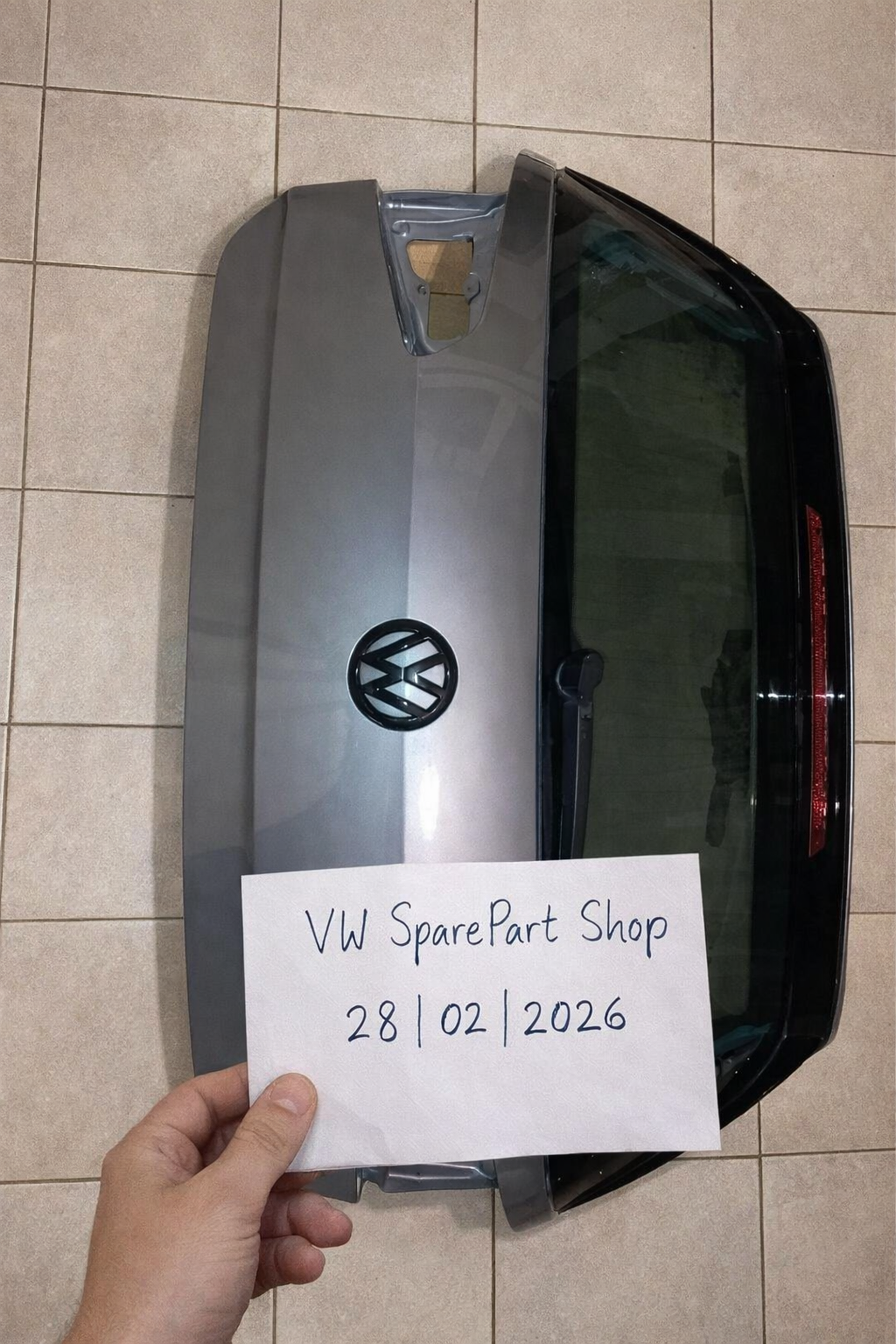
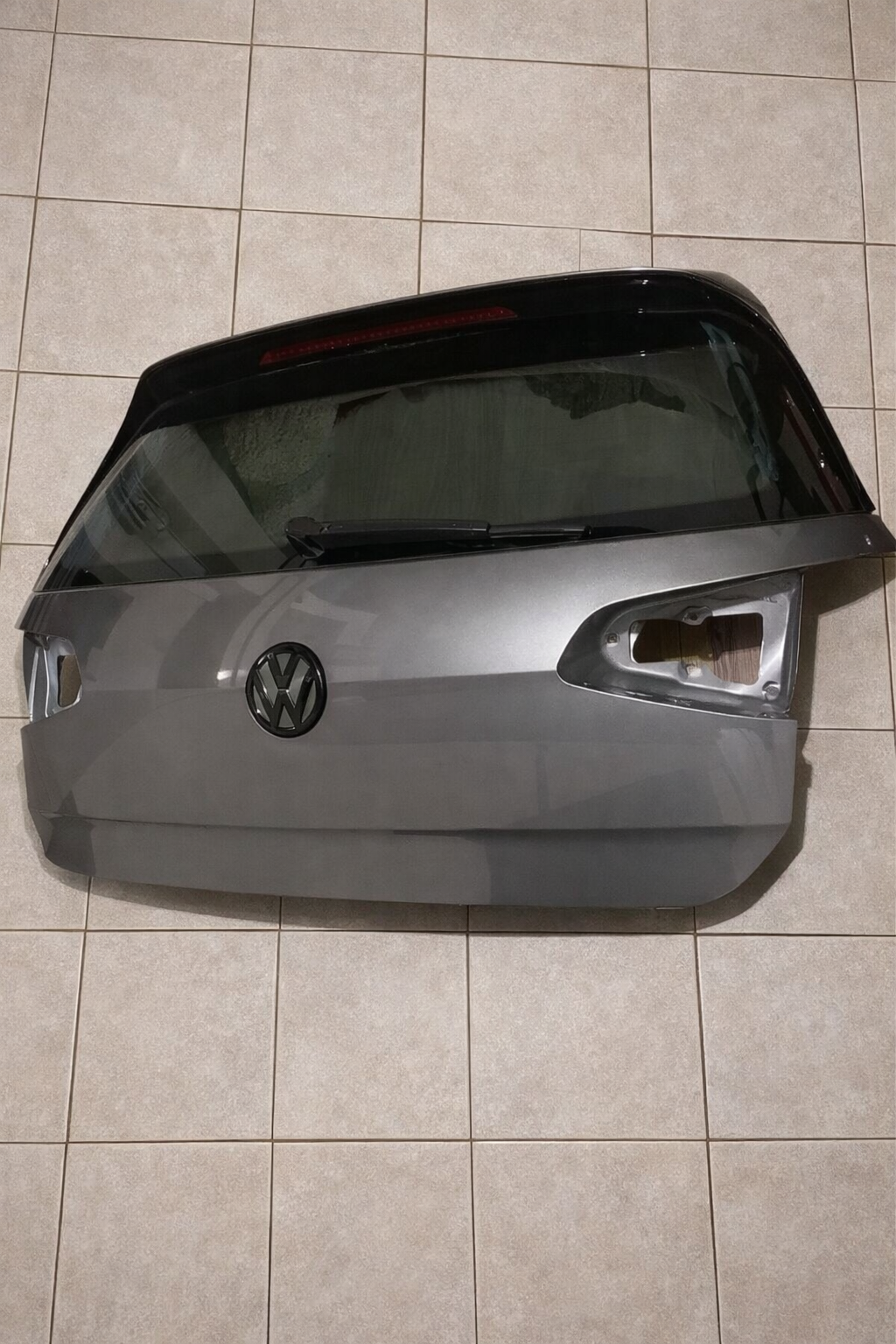
Volkswagen Golf rear tailgate bootlid
€500.00
Description
Volkswagen Golf Rear Tailgate Bootlid
Flawless rear styling begins with structural precision.
Confidence on the road is reinforced when body panels align exactly as engineered.
Damage to your hatch should be resolved with a solution designed specifically for your vehicle.
The Volkswagen Golf rear tailgate bootlid is a critical structural and visual component of your vehicle. Not only is rear-end styling defined by it, but safety systems, sealing integrity, and electronic integration are supported through its construction. Therefore, choosing a high-quality replacement Volkswagen Golf rear tailgate bootlid ensures durability, performance continuity, and long-term value retention.
Because the rear hatch is opened and closed repeatedly, reinforcement and alignment accuracy must be preserved. Consequently, this replacement unit has been engineered to replicate OEM geometry, hinge positioning, and latch alignment without compromise.
What Is a Volkswagen Golf Rear Tailgate Bootlid?
The Volkswagen Golf rear tailgate bootlid functions as the rear closure panel of the hatchback body. In addition, multiple integrated systems are supported within its framework:
-
Rear window glass housing
-
High-level brake light mount
-
Rear wiper motor assembly
-
Central locking mechanism
-
Rear view camera positioning
-
Manufacturer badge release mechanism
As a result, structural rigidity and precise mounting locations are required for seamless integration.
Unlike universal hatch panels, this Volkswagen Golf rear tailgate bootlid is model-specific. Accordingly, alignment with factory body contours is preserved.
Why Replacing a Damaged Bootlid Matters
Rear-end impact damage is often underestimated. However, misalignment can lead to cascading issues.
Water ingress may develop.
Wind noise can increase over time.
Electronic wiring channels may become exposed.
Paint cracking can accelerate corrosion.
Therefore, restoring your Volkswagen Golf rear tailgate bootlid prevents secondary damage while maintaining the vehicle’s aerodynamic balance.
Because the hatch contributes to body rigidity, structural distortion should never be ignored. Furthermore, improper panel gaps can compromise sealing systems and cabin insulation.
Engineered for Exact Volkswagen Golf Fitment
Precision manufacturing standards have been applied throughout production. Consequently, the Volkswagen Golf rear tailgate bootlid aligns with factory hinge and latch placements.
OEM-Level Mounting Accuracy
Mounting points are pre-stamped according to Volkswagen specifications. As a result, installation time is minimized and adjustment requirements are reduced.
Reinforced Inner Frame Structure
Load-bearing channels are integrated within the internal frame. Therefore, repeated hatch operation does not weaken structural integrity over time.
Factory Contour Replication
Outer panel curvature matches original body lines. In turn, tail lights, bumper alignment, and rear quarter panel transitions remain visually consistent.
Material Quality & Construction Standards
Premium automotive-grade materials are used to ensure durability. Depending on the Volkswagen Golf model year, the rear tailgate bootlid may be constructed from:
-
High-strength galvanized steel
-
Lightweight reinforced aluminum
Because corrosion resistance is essential, an electro-deposition coating (E-coat) is applied prior to primer preparation. Consequently, rust formation is significantly reduced.
Moisture resistance is further enhanced through seam-sealed reinforcement joints. Additionally, internal cavities are designed to allow proper drainage.
Compatibility Across Volkswagen Golf Generations
Fitment compatibility is critical before purchase. This Volkswagen Golf rear tailgate bootlid is suitable for selected generations including:
-
Volkswagen Golf Mk5
-
Volkswagen Golf Mk6
-
Volkswagen Golf Mk7
-
Volkswagen Golf Mk7.5
(Exact compatibility should always be verified using VIN or model year.)
Because generational design differences exist, badge placement, camera mounting provisions, and rear light cut-outs vary. Therefore, confirming the correct variant ensures seamless integration.
Integrated Technology Support
Modern hatchbacks rely on embedded systems. Accordingly, this Volkswagen Golf rear tailgate bootlid supports:
-
Rear camera calibration brackets
-
Heated rear window wiring routes
-
Central locking latch assembly
-
Rear wiper motor mounting plate
-
High-mounted brake light recess
As a result, factory components can be transferred without structural modification.
Moreover, wiring harness routing channels are preserved. Consequently, electronic functionality remains uncompromised.
Highlight Features for Product Listings
✅ Direct Replacement Volkswagen Golf Rear Tailgate Bootlid
✅ Precision OEM Stamped Panel Construction
✅ Corrosion-Resistant E-Coated Surface
✅ Reinforced Hinge & Latch Support Points
✅ Ready for Professional Paint Application
✅ Compatible with Factory Camera & Wiper Systems
✅ Model-Specific Mounting Geometry
✅ Structural Integrity Tested for Daily Use
✅ Designed for Long-Term Durability
Structural Safety & Rear-End Integrity
Vehicle safety extends beyond airbags and crumple zones. Because rear hatch rigidity contributes to impact energy distribution, panel strength matters.
Structural reinforcement beams are integrated into the inner assembly. Consequently, energy dispersion characteristics align with factory engineering.
In addition, latch alignment ensures proper locking engagement. Therefore, rear compartment security is maintained.
Aesthetic Restoration & Resale Value
Visual symmetry influences resale appeal. Accordingly, replacing a dented or corroded hatch restores a clean rear profile.
Panel gaps return to factory specification.
Paint blending becomes seamless.
Rear lighting alignment appears consistent.
Badge placement remains centered and level.
Because buyers assess body condition carefully, a properly fitted Volkswagen Golf rear tailgate bootlid supports long-term valuation.
Environmental & Longevity Considerations
Sustainability increasingly influences automotive repair decisions. Therefore, investing in a high-quality replacement reduces the need for repeated repairs.
Long-lasting corrosion resistance extends panel lifespan.
Structural rigidity reduces vibration-related wear.
Proper sealing protects interior insulation materials.
Consequently, fewer resources are required for future maintenance.
Installation Overview
Professional installation is strongly recommended. Although skilled technicians may complete the process efficiently, alignment precision must be verified.
The process typically includes:
-
Removal of interior trim panels
-
Disconnection of electrical harnesses
-
Support and removal of struts
-
Detachment from hinge assembly
-
Transfer of glass and components
-
Reinstallation and alignment calibration
Because torque specifications vary by model, manufacturer guidelines should always be followed.
Who Benefits from This Replacement?
-
Vehicle owners restoring collision damage
-
Body shops performing insurance repairs
-
Automotive rebuild specialists
-
Enthusiasts upgrading worn panels
-
Inclusive mobility vehicle modifiers
Regardless of experience level, anyone seeking factory-grade restoration can benefit from this Volkswagen Golf rear tailgate bootlid solution.
Why Choose Quality Over Low-Cost Alternatives?
Budget panels may compromise alignment accuracy. In contrast, precision-stamped manufacturing ensures dimensional consistency.
Cheaper steel may corrode prematurely. However, galvanized or treated materials resist environmental exposure.
Universal hatch panels require modification. Conversely, a Volkswagen Golf rear tailgate bootlid designed specifically for your model eliminates guesswork.
Because long-term reliability outweighs short-term savings, quality should always be prioritized.
Generational Differences, Paint Preparation, Aerodynamics & Advanced Installation Standards


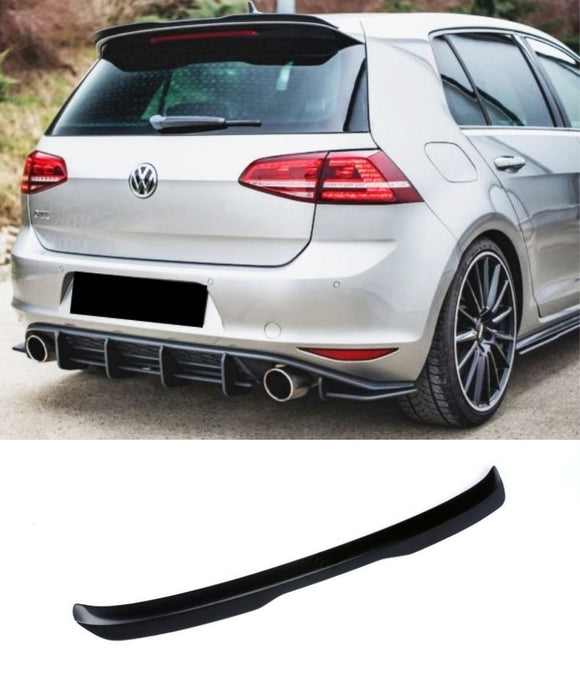
Design evolution has shaped each generation of the Golf.
Structural refinements have improved rigidity and weight distribution over time.
Technological integration has expanded rear hatch functionality significantly.
The Volkswagen Golf rear tailgate bootlid differs subtly across generations. Therefore, understanding generational engineering differences ensures correct part selection and flawless installation. Because body geometry, badge placement, and camera configurations vary, compatibility must always be confirmed before purchase.
Generational Comparison – Understanding Fitment Nuances
Although the Golf maintains a recognizable silhouette, the rear tailgate bootlid has evolved in both structure and technology integration.
Mk5 (2003–2009)
Simplified electronic integration defines this generation. Consequently, rear hatch construction prioritizes structural steel reinforcement with minimal embedded camera systems.
-
Central badge release mechanism
-
Standard rear wiper integration
-
High-mounted brake light housing
-
Conventional latch system
Because fewer electronic systems are embedded, component transfer is generally straightforward.
Mk6 (2008–2013)
Refinement in panel stamping improves aerodynamic smoothness. Additionally, improved anti-corrosion treatments are commonly observed.
-
Enhanced internal bracing
-
Improved seal channels
-
Optional rear-view camera systems
-
Refined badge alignment geometry
Therefore, selecting the correct Volkswagen Golf rear tailgate bootlid for Mk6 models ensures compatibility with optional camera brackets.
Mk7 (2012–2017)
Technology integration becomes more prominent in this generation. As a result, mounting precision becomes increasingly important.
-
Integrated rear-view camera housing
-
Advanced latch calibration system
-
Lightweight panel engineering
-
Improved aerodynamic contouring
Because weight reduction was prioritized, aluminum variants may be present depending on trim level.
Mk7.5 (2017–2020)
Subtle redesign elements affect badge location and trim configuration. Consequently, not all Mk7 bootlids are interchangeable with Mk7.5 variants.
-
Revised emblem release mechanism
-
Enhanced spoiler integration
-
Updated camera positioning
-
LED lighting alignment adjustments
For that reason, VIN verification is strongly recommended.
Paint Preparation & Surface Finishing Standards
Proper finishing determines long-term durability and aesthetic integration. Therefore, every Volkswagen Golf rear tailgate bootlid is supplied primer-ready to allow precise color matching.
Surface Preparation Process
Before painting, professional body shops typically:
-
Inspect the E-coated surface
-
Apply light sanding for adhesion
-
Clean and degrease thoroughly
-
Apply primer surfacer
-
Perform block sanding for smoothness
-
Apply base coat and clear coat
Because correct paint thickness ensures color depth consistency, blending adjacent panels may be recommended.
Aerodynamic Considerations & Rear Airflow Dynamics
Aerodynamics influence fuel efficiency and cabin noise. Accordingly, the Volkswagen Golf rear tailgate bootlid has been engineered to complement roofline curvature and spoiler positioning.
Airflow transitions from roof to hatch surface.
Spoiler lip reduces turbulence at highway speeds.
Panel curvature assists in rear wind deflection.
Correct alignment prevents drag irregularities.
Therefore, improper installation can subtly increase aerodynamic drag. Consequently, ensuring correct panel positioning supports both efficiency and noise reduction.
Advanced Installation & Alignment Best Practices
Professional installation ensures factory-level results. Although the process may appear straightforward, precision alignment requires attention to detail.
Alignment Calibration
Hinge bolts should be loosely mounted initially.
Panel gaps must be measured evenly on both sides.
Latch engagement must be tested repeatedly.
Strut tension must be verified before final torque.
Because uneven torque application may cause misalignment, cross-tightening techniques are recommended.
Electrical Integration & System Recalibration
Modern models require electronic calibration following installation.
-
Rear camera angle adjustment
-
Central locking synchronization
-
Heated rear window continuity testing
-
Brake light function verification
Therefore, diagnostic scanning tools may be required after installation on newer variants.
Structural Load Distribution & Long-Term Durability
Rear tailgate components endure repetitive mechanical stress. Accordingly, hinge reinforcement zones must withstand thousands of open-close cycles.
Internal reinforcement ribs distribute weight evenly.
Latch housing supports vertical load transfer.
Strut anchor points resist long-term fatigue.
Glass mounting channels prevent vibration.
Because daily usage accumulates mechanical strain, durable construction ensures longevity.
Weather Sealing & Moisture Protection
Sealing integrity protects cabin comfort. Therefore, correct alignment with weather stripping channels is essential.
Water runoff channels guide moisture downward.
Seal compression must be evenly distributed.
Drain holes prevent water accumulation.
Rear glass bonding must remain intact.
Consequently, professional inspection following installation prevents future leakage.
Sustainability & Repair Efficiency
Replacing a damaged panel instead of scrapping a vehicle reduces environmental impact. Moreover, high-quality manufacturing extends component lifespan.
Corrosion-resistant coatings reduce replacement frequency.
Proper alignment prevents premature wear.
Long-term structural integrity reduces future repair costs.
Because sustainability increasingly influences automotive decisions, investing in a durable Volkswagen Golf rear tailgate bootlid supports responsible vehicle ownership.
Enhanced Product Listing Highlights
✅ Generation-Specific Volkswagen Golf Rear Tailgate Bootlid
✅ Compatible with Factory Electronics & Camera Systems
✅ Precision Stamped for Accurate Panel Gaps
✅ Aerodynamically Contoured Surface
✅ Corrosion-Resistant E-Coated Finish
✅ Reinforced Hinge & Latch Mounting Points
✅ Professional Paint-Ready Surface
✅ Designed for Long-Term Structural Integrity
✅ Optimized for Seamless OEM Integration
Technical Specifications, Logistics Standards, Insurance Compliance & Buyer Optimization
Precision engineering defines long-term reliability.
Measured tolerances determine installation accuracy.
Protective logistics ensure damage-free delivery.
The Volkswagen Golf rear tailgate bootlid is more than an exterior panel. Structural geometry, hinge load distribution, latch calibration, and electronic integration all depend on dimensional accuracy. Therefore, Part 3 focuses on technical specifications, packaging protocols, insurance repair alignment, and conversion-driven buyer guidance to ensure a confident purchasing decision.
Detailed Technical Specifications
Dimensional tolerances are controlled during production. Consequently, alignment consistency is maintained across compatible Volkswagen Golf models.
Structural Measurements (Model Dependent)
-
Outer Panel Thickness: Approx. 0.7–1.0 mm (steel variants)
-
Aluminum Variant Thickness: Approx. 1.1–1.4 mm
-
Hinge Reinforcement Plate Gauge: Increased load-bearing density
-
Latch Housing Reinforcement: Multi-layer stamping integration
-
Glass Aperture Geometry: OEM-calibrated curvature radius
Because manufacturing tolerances remain within strict automotive standards, panel gap symmetry can be achieved during installation.
Inner Frame Reinforcement Architecture
Internal bracing channels distribute mechanical stress. As a result, repetitive opening cycles do not compromise structural integrity.
Load transfer occurs through:
-
Upper hinge reinforcement plates
-
Vertical rib supports
-
Latch anchoring chamber
-
Strut mounting brackets
Therefore, the Volkswagen Golf rear tailgate bootlid maintains rigidity even under long-term daily operation.
Weight & Balance Considerations
Balanced panel weight supports smooth hatch operation. Consequently, strut tension remains consistent without excessive strain.
Approximate Weight Ranges:
-
Steel Variant: 18–25 kg (without glass)
-
Aluminum Variant: 14–20 kg (without glass)
Because lighter panels reduce hinge fatigue, aluminum configurations may extend operational lifespan in specific trims.
OEM Reference Compatibility
Correct part referencing ensures proper selection. Accordingly, cross-verification with factory part numbers is recommended prior to ordering.
Common reference categories include:
-
Hatch Assembly
-
Rear Closure Panel
-
Trunk Lid Shell
-
Bootlid Outer Panel
Therefore, confirming VIN alignment eliminates compatibility uncertainty.
Shipping & Protective Packaging Standards
Transport integrity directly influences installation success. For that reason, reinforced packaging protocols are applied.
Packaging Protection Includes:
-
Double-wall industrial carton housing
-
Foam corner impact absorbers
-
Protective film coating over outer panel
-
Reinforced internal bracing inserts
-
Moisture-resistant wrapping
Because large body panels are vulnerable during transit, shock-absorbing packaging reduces delivery risk.
Inspection Upon Delivery
A structured inspection process should be followed immediately after receipt.
-
Examine outer surface for dents or scratches
-
Verify hinge and latch bracket integrity
-
Confirm mounting points remain undistorted
-
Inspect coating consistency
-
Compare dimensions with original panel
Therefore, documenting condition prior to installation protects warranty eligibility.
Insurance Repair & Body Shop Integration
Insurance repairs require structural conformity. Consequently, selecting a Volkswagen Golf rear tailgate bootlid manufactured to OEM standards supports claim approval processes.
Insurance adjusters typically assess:
-
Dimensional alignment
-
Structural integrity equivalence
-
Safety compliance compatibility
-
Electronic system integration
Because substandard panels may delay repair authorization, quality selection reduces administrative friction.
Regulatory & Safety Alignment
Rear closure panels must comply with regional vehicle safety standards. Accordingly, correct latch engagement and reinforcement thickness are essential.
Key safety considerations include:
-
Secure locking under collision stress
-
Brake light housing compliance
-
Rear visibility preservation
-
Glass support integrity
Therefore, a properly engineered Volkswagen Golf rear tailgate bootlid contributes to vehicle safety certification continuity.
Frequently Asked Questions (FAQ)
Volkswagen Golf Rear Tailgate Bootlid
Clear answers improve purchasing confidence.
Accurate information reduces installation uncertainty.
Proper guidance ensures long-term satisfaction.
Below, the most common questions about the Volkswagen Golf rear tailgate bootlid are addressed in detail to support informed decision-making.
1. What is a Volkswagen Golf rear tailgate bootlid?
The Volkswagen Golf rear tailgate bootlid is the rear hatch panel of the hatchback body. It encloses the luggage compartment while supporting structural, electronic, and safety components. In addition, rear glass, wiper systems, brake light housing, locking mechanisms, and camera assemblies are mounted within it.
2. How do I know if this bootlid fits my Volkswagen Golf?
Fitment depends on model generation and year. Therefore, VIN verification is strongly recommended before purchase. Because Mk5, Mk6, Mk7, and Mk7.5 variants have subtle structural differences, confirming compatibility ensures correct alignment and mounting accuracy.
3. Is this an OEM or aftermarket Volkswagen Golf rear tailgate bootlid?
This bootlid is manufactured to OEM-equivalent specifications. Consequently, mounting geometry, structural reinforcement, and panel curvature align with factory standards. However, it is not supplied directly by the vehicle manufacturer unless specifically stated.
4. Does the Volkswagen Golf rear tailgate bootlid come painted?
No. The bootlid is supplied in a corrosion-resistant E-coated or primer-ready finish. Therefore, professional painting and color matching are required prior to installation.
5. Can my existing rear glass be reused?
Yes, provided the original glass remains undamaged. Because glass bonding requires specialized adhesive and alignment tools, professional installation is recommended.VW Golf rear hatch panel
6. Are hinges, latch, and wiring included?
Typically, the Volkswagen Golf rear tailgate bootlid is supplied as a shell panel only. Consequently, original hinges, latch systems, wiring harnesses, badges, cameras, and trim components are transferred from the existing unit.
7. Is the rear-view camera compatible?
Yes, model-specific mounting provisions are integrated where applicable. However, because camera positioning differs across generations, compatibility must be confirmed before purchase.VW Golf rear hatch panel
8. Will replacing the bootlid affect my vehicle warranty?
Warranty impact depends on manufacturer policies and vehicle age. Therefore, consulting your dealership or warranty provider is advisable before installation.
9. Does the bootlid support central locking and badge-release mechanisms?
Yes. Factory latch housing and emblem-release alignment points are incorporated. As a result, central locking systems can function normally once properly installed and calibrated.
10. How heavy is the Volkswagen Golf rear tailgate bootlid?
Weight varies by material and generation. Steel variants generally weigh more than aluminum variants. Because proper strut tension depends on weight distribution, correct compatibility is essential.
11. Is professional installation required?
Although skilled individuals may complete installation, professional body shop fitting is strongly recommended. Alignment precision, torque calibration, and electronic testing ensure optimal performance.
12. Will this bootlid restore factory panel gaps?
Yes, when installed correctly. Because precision stamping replicates OEM dimensions, even panel gaps can be achieved during proper alignment.
13. Does it include weather seals?
Weather seals are typically reused from the original panel unless replacements are purchased separately. Consequently, seal inspection during installation is recommended.
14. Is the Volkswagen Golf rear tailgate bootlid corrosion resistant?
Yes. Anti-corrosion coatings are applied during manufacturing. Additionally, primer-ready finishes support long-term durability when properly painted.
15. Can I install it without repainting?
Repainting is required for color matching and UV protection. Therefore, installation without painting is not recommended for long-term use.
16. Is the bootlid compatible with aftermarket spoilers?
Compatibility depends on spoiler design. Because mounting hole patterns vary, verifying alignment before drilling or modification is essential.
17. What should I inspect upon delivery?
Upon arrival:
-
Check for surface dents or scratches
-
Inspect hinge mounting points
-
Verify latch housing alignment
-
Confirm coating consistency
Because installation voids some return policies, inspection should occur before painting or fitting.
18. Does replacing the Volkswagen Golf rear tailgate bootlid improve resale value?
Yes. Structural integrity and visual alignment positively influence resale perception. Consequently, a professionally restored rear hatch can support stronger resale positioning.
19. Is this suitable for insurance repairs?
Yes. OEM-equivalent structural standards support insurance repair requirements. However, insurance approval policies vary by provider.Golf tailgate panel OEM
20. How long does installation typically take?
Installation time varies by workshop experience and model complexity. Generally, professional body shops complete removal, transfer, alignment, and fitting within several hours, excluding paint curing time.Golf tailgate panel OEM
21. Does this bootlid affect vehicle aerodynamics?
When correctly installed, aerodynamic performance remains consistent with factory specifications. Misalignment, however, may increase wind resistance or noise.
22. Can damaged rusted bootlids be repaired instead?
Minor dents may be repairable. However, severe corrosion or structural distortion often warrants full replacement. Because rust can spread internally, replacing the Volkswagen Golf rear tailgate bootlid is frequently more cost-effective long term.
23. Is electronic recalibration necessary after installation?
On newer models, rear camera and electronic latch systems may require recalibration. Therefore, diagnostic tools may be needed after installation.
24. What documents should I check before ordering?
-
Vehicle registration
-
VIN number
-
Model year confirmation
-
Regional specification (UK, EU, etc.)
Because generational differences exist, confirming details ensures compatibility.
25. Why choose a high-quality Volkswagen Golf rear tailgate bootlid over a low-cost alternative?
Lower-cost panels may compromise:
-
Alignment precision
-
Corrosion resistance
-
Structural reinforcement
-
Electronic integration accuracy
Therefore, investing in quality supports safety, durability, and long-term value.
Additional information
| Model | Volkswagen Golf Mk5 (2003–2009), Volkswagen Golf Mk6 (2008–2013), Volkswagen Golf Mk7 (2012–2017), Volkswagen Golf Mk7.5 (2017–2020) |
|---|
Reviews
There are no reviews yet.