
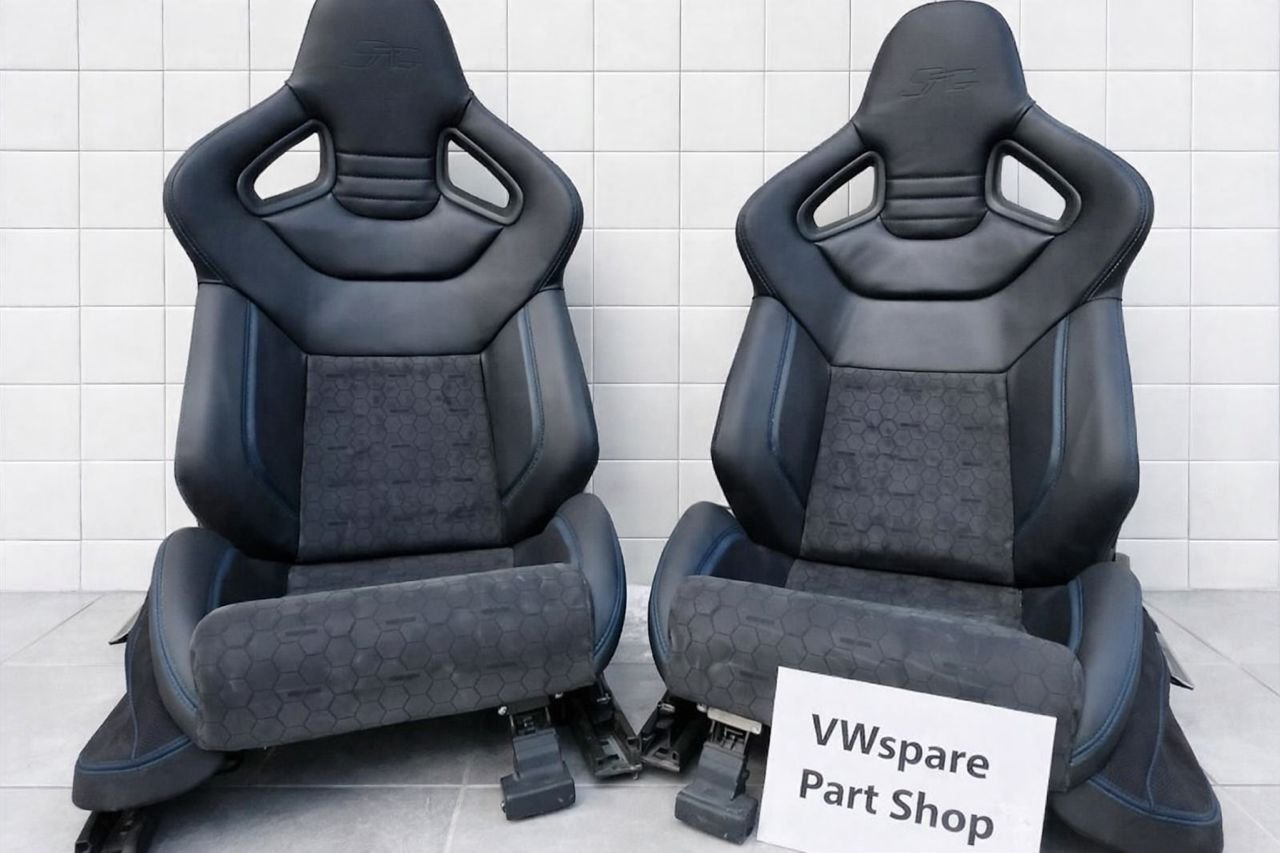
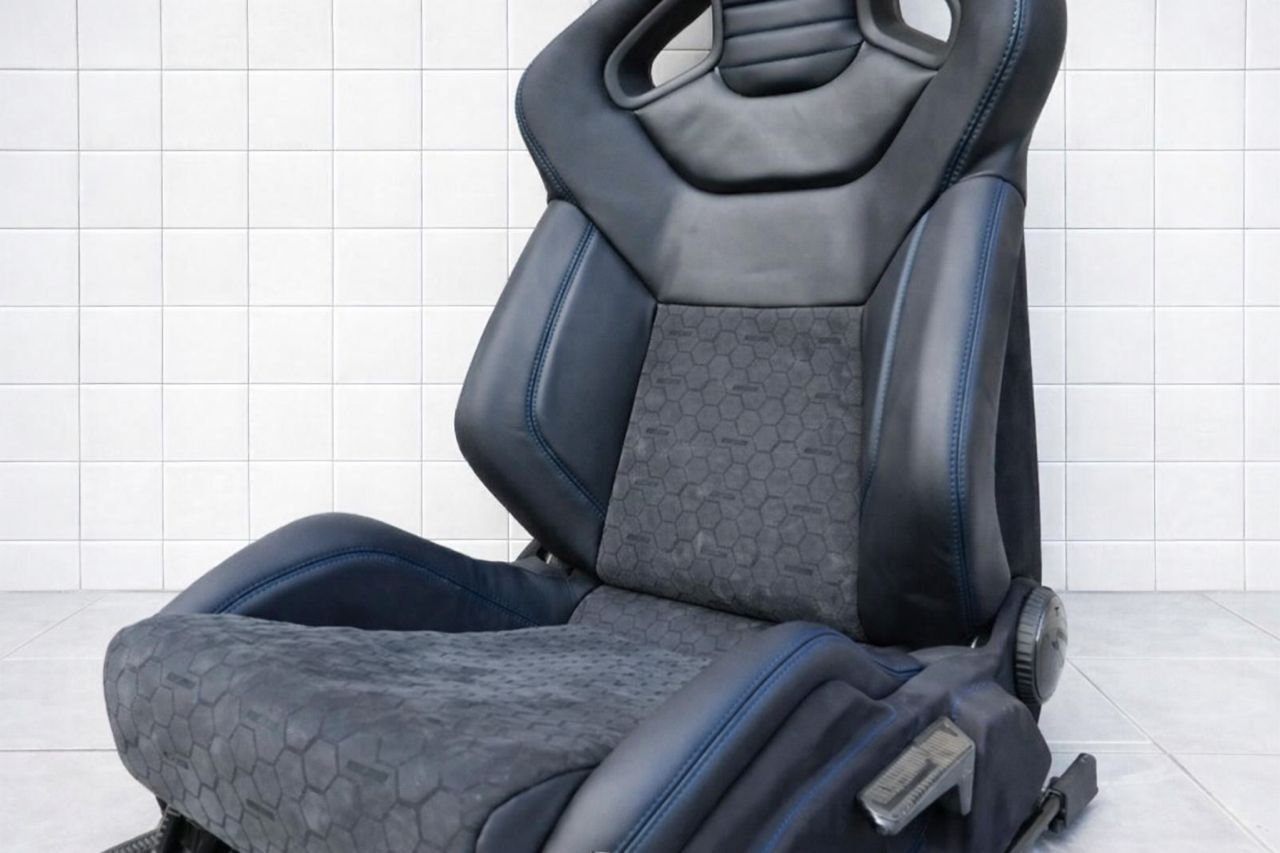
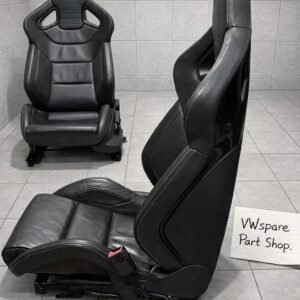
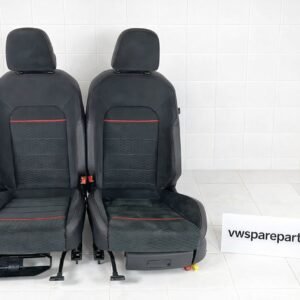
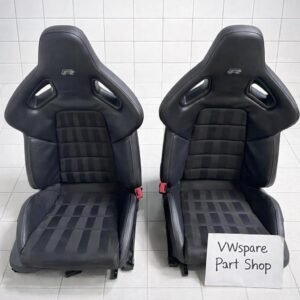
VW Audi Seats Original VW and Audi Bucket Seats RS
€1,500.00
Description
VW Audi Seats Original VW and Audi Bucket Seats RS
Brand Heritage, OEM Authenticity, and Performance Intent
Selecting seating for a performance-oriented vehicle is never a cosmetic decision alone. Instead, the choice directly influences control, comfort, safety, and long-term vehicle value. For drivers seeking a solution that aligns fully with factory engineering principles, VW Audi Seats Original VW and Audi Bucket Seats RS stand as a benchmark rather than an alternative.
Developed under the rigorous standards of Volkswagen and Audi, these original RS bucket seats reflect decades of motorsport insight, ergonomic research, and material innovation. Consequently, every component serves a purpose that extends beyond appearance and into measurable driving performance.
Understanding the RS Philosophy Behind Original VW and Audi Bucket Seats
Performance Is Designed, Not Added
Rather than retrofitting sport characteristics into a standard seat, RS bucket seats are engineered from inception with performance as a core requirement. Because of this design philosophy, lateral support, seat height, and driving position are calculated alongside suspension geometry and steering response.
As a result, VW Audi Seats Original VW and Audi Bucket Seats RS function as an integrated performance component rather than a standalone interior upgrade. This integration ensures that driver feedback remains consistent, predictable, and confidence-inspiring under all driving conditions.
Motorsport Influence Translated for the Road
Lessons derived from touring car racing, endurance motorsport, and high-speed testing environments shape the construction of RS bucket seats. However, these lessons are refined carefully to remain suitable for daily driving.
Therefore, aggressive bolstering is balanced with long-distance comfort, while structural rigidity is paired with controlled cushioning. This balance allows drivers of all experience levels to benefit from motorsport-grade seating without sacrificing practicality.
OEM Authenticity: Why “Original” Matters More Than Ever
Factory Specifications Preserve Vehicle Integrity
When original VW and Audi bucket seats RS are installed, factory alignment is preserved across multiple systems. Seat rails, mounting points, airbag sensors, and seatbelt tensioners align precisely with OEM tolerances.
Because of this precision, safety systems continue to operate exactly as engineered. Additionally, dashboard warnings and diagnostic systems remain unaffected, which eliminates common issues associated with non-original seating solutions.
Original Components Support Long-Term Ownership
Vehicle ownership often extends beyond short-term use. Over time, interior components face repeated stress, environmental exposure, and wear. OEM RS bucket seats are built to withstand these demands while maintaining structural integrity and surface quality.
Consequently, owners benefit from consistent comfort and appearance over years of use, rather than facing premature degradation commonly seen in lower-grade alternatives.
Design Language and Visual Identity of RS Bucket Seats
Instantly Recognizable RS Styling
From sculpted shoulder supports to integrated headrests, the visual identity of RS bucket seats communicates performance immediately. Clean stitching lines, embossed RS branding, and premium material transitions reinforce the motorsport-inspired aesthetic.
At the same time, the design remains refined rather than excessive. This restraint ensures compatibility with luxury-focused interiors while still signaling high-performance intent.
Inclusive Design for a Wide Range of Drivers
Although RS bucket seats appear aggressive, inclusivity remains central to their design. Seat dimensions, adjustability ranges, and cushioning profiles are engineered to support a broad spectrum of body types.
As a result, drivers and passengers alike experience secure support without discomfort or restriction. This inclusive approach reinforces the principle that performance enhancements should remain accessible rather than exclusive.
Materials Used in VW Audi Seats Original VW and Audi Bucket Seats RS
Purpose-Driven Upholstery Selection
Material choices in original RS bucket seats serve both functional and aesthetic objectives. Premium leather offers durability and a refined tactile experience, while Alcantara enhances grip and breathability during spirited driving.
Additionally, advanced textile blends are applied strategically to manage heat and moisture. Because of these material decisions, comfort remains stable across varying climates and driving conditions.
Reinforced Stitching and Surface Longevity
Surface durability depends not only on materials but also on construction methods. High-strength stitching patterns reinforce stress points, while factory-approved adhesives prevent delamination over time.
Therefore, visual quality and tactile integrity remain consistent, even under frequent use.
Structural Engineering Beneath the Surface
High-Strength Seat Frames
At the core of every RS bucket seat lies a rigid frame engineered for safety and performance. Steel or aluminum alloys are selected based on strength-to-weight ratios, ensuring both impact resistance and mass efficiency.
Because of this internal structure, seat deformation under load is minimized, which supports occupant stability during aggressive maneuvers.
Integration With Safety Systems
Original VW and Audi bucket seats RS are designed to function cohesively with side airbags, head protection systems, and seatbelt pretensioners. Integration is not optional; it is foundational.
As a result, safety performance remains uncompromised, even when compared with the vehicle’s original seating configuration.
Ergonomic Science, Driving Dynamics, and Everyday Comfort
While visual appeal often captures initial attention, true seating excellence reveals itself through ergonomics and performance during real-world use. In this context, VW Audi Seats Original VW and Audi Bucket Seats RS demonstrate their value most clearly. Every contour, angle, and density choice is informed by biomechanical research and validated through extensive on-road and track testing.
Rather than adapting generic seating concepts, engineers at Volkswagen and Audi developed RS bucket seats as an extension of the driver–vehicle interface. Consequently, posture, control, and comfort improve simultaneously rather than competitively.
Ergonomic Engineering: Designed Around the Human Body
Seating Geometry That Encourages Optimal Posture
Driving posture influences fatigue levels, reaction time, and long-term musculoskeletal health. For this reason, RS bucket seats are shaped to promote a neutral spine position while maintaining firm lateral support.
Seat base angles are calculated to reduce pressure on the lower back and thighs. At the same time, lumbar zones are reinforced subtly to support the natural curvature of the spine. Because of this balance, drivers experience reduced strain during both short commutes and extended journeys.
Adaptive Support Without Restriction
Aggressive bolsters often introduce discomfort when poorly executed. However, VW Audi Seats Original VW and Audi Bucket Seats RS avoid this compromise by distributing pressure evenly across contact points.
Side bolsters stabilize the torso during cornering, yet they allow natural movement when entering or exiting the vehicle. As a result, performance support remains present without feeling intrusive or limiting.
Driving Dynamics Enhanced by RS Bucket Seats
Stability During Acceleration, Braking, and Cornering
Vehicle dynamics depend heavily on driver stability. When excessive body movement occurs, steering precision and pedal modulation suffer. RS bucket seats mitigate this issue by anchoring the driver securely in position.
Because the body remains stable, steering inputs become more deliberate, braking force feels more controlled, and throttle modulation improves. Consequently, driver confidence increases in both spirited and everyday driving scenarios.
Improved Sensory Feedback From the Vehicle
Seating plays a crucial role in transmitting road feedback. Through a rigid internal structure and carefully tuned cushioning, RS bucket seats allow drivers to perceive subtle changes in traction and chassis behavior.
Therefore, communication between vehicle and driver becomes clearer, supporting faster reactions and more intuitive control.
Comfort Analysis: Short Trips Versus Long-Distance Driving
Daily Driving Comfort
In urban environments, frequent stops and varied driving positions demand adaptability. RS bucket seats accommodate these conditions through supportive cushioning and ergonomic adjustability.
Seat height, backrest angle, and forward reach align naturally with steering wheel and pedal placement. Because of this harmony, daily driving remains comfortable rather than fatiguing.
Long-Haul Endurance and Fatigue Reduction
Extended driving exposes weaknesses in poorly designed seats. Pressure points intensify, circulation decreases, and discomfort accumulates. Original RS bucket seats address these challenges through consistent foam density and breathable materials.
As a result, circulation remains stable, muscle fatigue is reduced, and concentration is preserved over longer distances.
Inclusive Ergonomics for a Broad Driver Profile
Designed for Diversity, Not a Single Body Type
Although RS bucket seats appear purpose-built for performance enthusiasts, their design accommodates a wide range of physiques. Adjustability ranges and seat contours reflect inclusivity rather than exclusivity.
Drivers of different heights and builds can achieve proper seating posture without compromise. Consequently, performance-oriented seating becomes accessible to a broader audience.
Passenger Comfort Considerations
Performance seating should never neglect passengers. RS bucket seats extend the same ergonomic principles to the passenger side, ensuring shared comfort and support.
This approach reinforces the idea that high-performance interiors can remain welcoming and inclusive.
Comparison Context: OEM RS Seats vs. Generic Alternatives
Ergonomic Consistency Versus One-Size-Fits-All Designs
Aftermarket seats often rely on generalized shapes intended to fit many vehicles. In contrast, OEM RS bucket seats are tailored specifically to VW and Audi platforms.
Because of this specificity, alignment between seat, steering wheel, pedals, and dashboard remains intact. Consequently, ergonomic harmony is preserved rather than approximated.
Long-Term Comfort Versus Short-Term Appeal
While some alternatives prioritize visual aggression, they frequently overlook long-term comfort. Original RS bucket seats balance aesthetics with endurance, ensuring satisfaction extends beyond initial impressions.
This balance proves especially valuable for owners who drive regularly rather than occasionally.
Key Ergonomic and Performance Benefits Introduced in Part 2
Highlighted Advantages
-
Optimized seating geometry for spinal alignment
-
Enhanced lateral stability during dynamic driving
-
Improved steering and pedal control
-
Reduced fatigue on long journeys
-
Inclusive adjustability for diverse drivers
-
Consistent comfort across daily and performance use
These factors collectively demonstrate why VW Audi Seats Original VW and Audi Bucket Seats RS influence driving quality so profoundly.VW Audi Seat
Safety Engineering, Material Durability, and Long-Term Ownership Value
Beyond comfort and performance, seating plays a critical role in occupant protection and vehicle integrity. For this reason, VW Audi Seats Original VW and Audi Bucket Seats RS are engineered as safety components rather than decorative interior elements. Every layer—from the internal frame to the surface upholstery—contributes directly to impact management, system integration, and long-term reliability.VW Audi Seat
Developed in parallel with vehicle safety architecture by Volkswagen and Audi, these original RS bucket seats meet the same stringent standards applied to structural body components. As a result, safety performance remains consistent with factory design intent.VW Audi Seat
Safety-Centric Engineering in RS Bucket Seats
Seating as an Active Safety Component
Modern vehicle safety extends far beyond airbags alone. Seating position, structural rigidity, and occupant restraint geometry all influence injury mitigation during collisions.VW Audi Seat
Original RS bucket seats are designed to position occupants optimally in relation to airbags, seatbelts, and crumple zones. Because of this alignment, restraint systems deploy as calibrated, rather than compensating for non-standard seating geometry.
High-Strength Frame Construction
At the structural core, RS bucket seats utilize reinforced steel or lightweight aluminum frames selected for controlled deformation characteristics. These frames are impact-tested to absorb and redirect forces away from critical areas.
Consequently, occupant movement during frontal, side, or rear impacts remains within engineered tolerances, supporting predictable safety outcomes.
Airbag and Restraint System Integration
Seamless Side Airbag Compatibility
Side airbags are calibrated precisely to seat structure, foam density, and upholstery seams. OEM RS bucket seats incorporate dedicated airbag deployment zones, ensuring correct timing and trajectory.
Because factory specifications are maintained, airbag deployment remains unobstructed and effective. This integration eliminates the risks often associated with aftermarket seating solutions.
Seatbelt Geometry and Pretensioner Alignment
Seatbelt effectiveness depends on anchor points and occupant posture. RS bucket seats preserve original seatbelt geometry, allowing pretensioners and load limiters to function as intended.
As a result, restraint forces distribute evenly across the body, reducing injury risk during high-energy events.VW Audi Seat
Material Durability Under Real-World Conditions
Resistance to Wear, Heat, and UV Exposure
Interior materials face constant exposure to sunlight, temperature changes, and friction. Original VW and Audi RS bucket seats are upholstered using materials tested extensively for UV resistance and thermal stability.
Because of these properties, fading, cracking, and material breakdown occur far more slowly than with non-OEM alternatives.VW Audi Seat
Foam Density and Shape Retention
Seat comfort relies heavily on foam quality. RS bucket seats use multi-density foam layers engineered to retain shape under repeated compression.VW Audi Seat
Therefore, seating support remains consistent over time, preventing sagging and uneven wear that commonly compromise comfort and posture.VW Audi Seat
Manufacturing Standards and Quality Control
Factory Production Processes
OEM RS bucket seats are produced under controlled manufacturing environments with rigorous quality inspections at each stage. Stitching tolerances, foam bonding, and frame welds are verified against strict benchmarks.
This level of oversight ensures uniform quality across all seats, regardless of production batch.
Traceability and Compliance
Each original seat can be traced back to its production specifications. Compliance with regional safety regulations and internal performance standards is documented and verified.
As a result, owners benefit from transparent authenticity and compliance assurance.
Ownership Experience and Long-Term Value
Preserving Interior Cohesion
Vehicle interiors are designed as cohesive systems. Installing original RS bucket seats maintains visual and functional harmony with dashboards, door panels, and trim elements.
This cohesion enhances perceived quality and reinforces the premium nature of the vehicle interior.
Impact on Vehicle Resale Value
Original equipment components strongly influence resale and collector appeal. VW Audi Seats Original VW and Audi Bucket Seats RS signal authenticity and careful ownership to prospective buyers.
Consequently, vehicles equipped with OEM RS seating often command higher resale values compared to those fitted with non-original alternatives.
Authenticity Versus Replication
Avoiding Compromises in Safety and Fitment
Replica or aftermarket seats may resemble RS designs visually; however, internal engineering and safety validation often differ significantly.
OEM RS bucket seats eliminate uncertainty by delivering verified performance, compatibility, and durability.
Confidence Through Proven Engineering
Rather than relying on marketing claims, original seats provide documented engineering outcomes validated through years of testing and real-world use.
This confidence extends throughout ownership, from daily driving to eventual resale.
Compliance, Testing Protocols, and Engineering Validation
Safety and durability are not abstract claims within OEM development—they are verified outcomes. In the case of VW Audi Seats Original VW and Audi Bucket Seats RS, validation occurs through layered testing, regulatory compliance, and continuous quality verification. This extended section deepens the discussion by examining how original RS bucket seats are proven, not merely positioned, as premium safety-critical components.
Engineered and validated by Volkswagen and Audi, these seats undergo the same scrutiny as structural and restraint systems. Consequently, performance and safety are confirmed long before customer delivery.
Regulatory Compliance and Global Safety Standards
Certified to International Automotive Regulations
Original RS bucket seats are designed to comply with a wide range of international automotive safety standards. These include European ECE regulations, North American FMVSS requirements, and internal manufacturer benchmarks that often exceed minimum legal thresholds.
Because of this multi-market compliance approach, OEM RS seats remain suitable for vehicles operating across different regions without modification. This global readiness reinforces their reliability and legitimacy.VW Audi Seat
Alignment With Vehicle Homologation
Each seating configuration is homologated alongside the vehicle model for which it is intended. Seat structure, mounting points, and restraint interfaces are validated as a unified system rather than as isolated components.
As a result, homologation integrity is preserved, which is particularly important for performance models and collector-grade vehicles.VW Audi Seat
Crash Testing and Dynamic Load Validation
Simulated and Real-World Impact Scenarios
RS bucket seats are subjected to simulated crash environments that replicate frontal, side, and rear impacts. Load paths through the seat frame are analyzed to ensure predictable deformation behavior.VW Audi Seat
Additionally, sled testing evaluates occupant movement relative to airbags and seatbelts. Through these tests, seating geometry is refined to maintain optimal restraint positioning under extreme conditions.
Longitudinal Load and Fatigue Testing
Beyond impact scenarios, RS bucket seats undergo repeated load cycles that simulate years of entry, exit, and driving stress. This fatigue testing ensures that welds, fasteners, and foam structures maintain integrity over time.
Therefore, long-term safety performance remains consistent rather than degrading unpredictably.
Material Validation Beyond Visual Quality
Fire Resistance and Thermal Stability
Interior materials must meet strict flammability standards. RS bucket seat upholstery and foams are tested for controlled burn rates and thermal behavior under elevated temperatures.
Because these requirements are met at the material level, interior safety performance extends beyond crash events into broader risk scenarios.
Chemical and Environmental Resistance
Exposure to cleaning agents, body oils, humidity, and temperature fluctuations can compromise inferior materials. OEM RS seats are validated against chemical exposure and environmental aging tests.
As a result, material breakdown is minimized, preserving both safety characteristics and interior appearance.
Reviews
There are no reviews yet.