
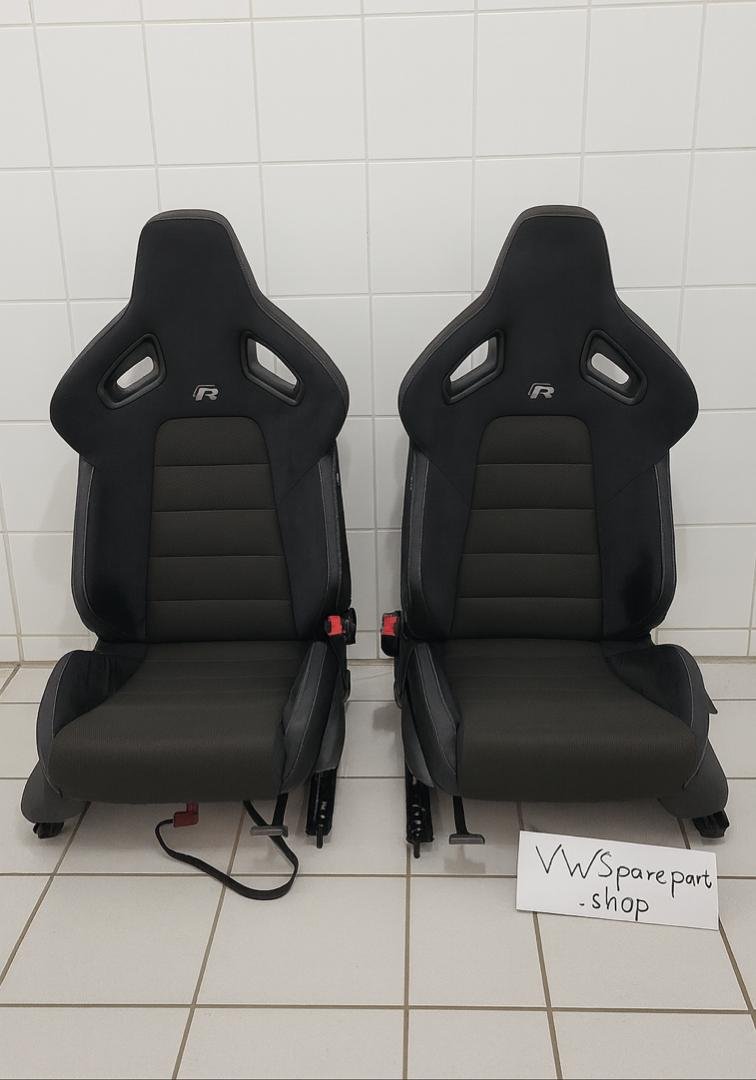
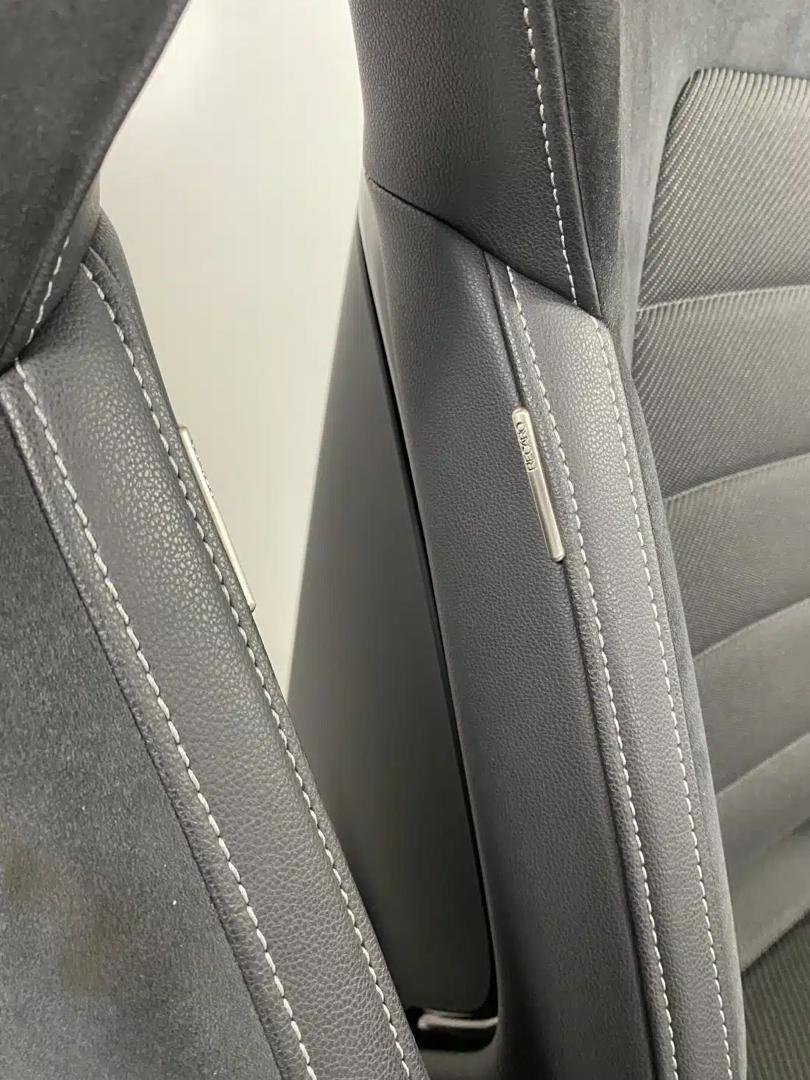
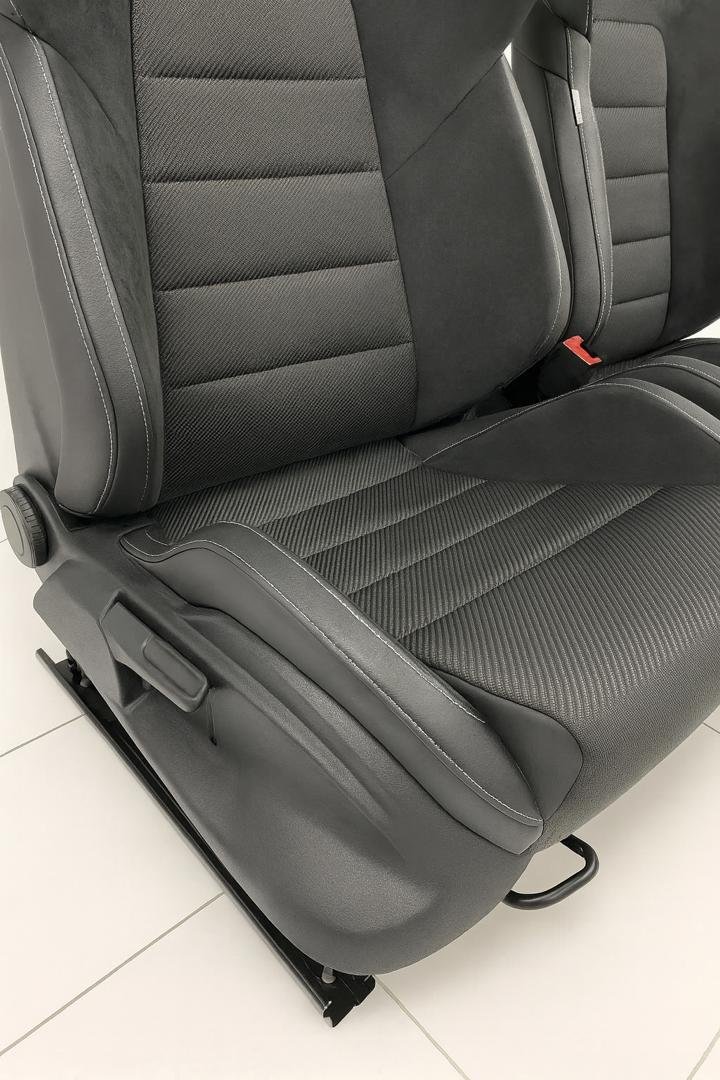
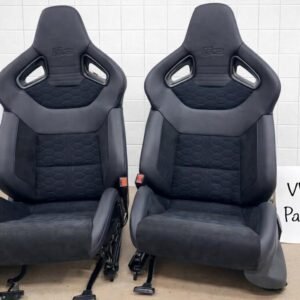
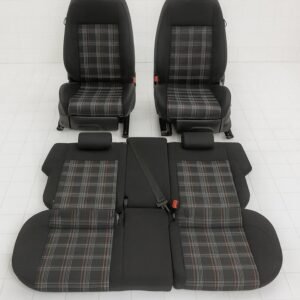
VW seats VW Recaro Wingback original
€1,000.00
VW Recaro Wingback seats are engineered to deliver a focused driving experience built around control, comfort, and premium design. Developed through Recaro’s motorsport expertise and tailored for Volkswagen platforms, these seats provide exceptional support while maintaining everyday usability. As a result, they transform both performance driving and daily journeys.
Description
VW Recaro Wingback Seats – Motorsport Support, Premium Comfort
Recaro Heritage and Volkswagen Performance Alignment
Recaro has long been recognized as a benchmark in performance seating, with a heritage rooted deeply in motorsport, aviation, and advanced ergonomic research. From competitive racing environments to high-performance road vehicles, the brand has consistently focused on one core objective: optimizing the interface between driver and machine. As a result, Recaro seats are widely regarded as a reference point for support, safety, and comfort VW seats VW Recaro Wingback
Performance Driving Benefits, Control, and Track Influence
Performance driving places unique demands on seating, and the VW Recaro Wingback seats were engineered to meet those demands without sacrificing everyday usability. Rather than serving as a passive place to sit, the seat functions as a critical interface that connects the driver to the vehicle’s dynamics. As a result, control, confidence, and consistency improve across a wide range of driving conditions VW seats VW Recaro Wingback.
Moreover, lateral support is a defining advantage during spirited driving. The pronounced side bolsters and wingback shoulders work together to limit unnecessary body movement during cornering. Consequently, the driver remains centered, which reduces the need to brace against the steering wheel or door panel. This stability allows steering inputs to remain precise and intentional.
In addition, the Wingback architecture supports braking performance. Under heavy deceleration, the seat maintains upper-body alignment and prevents forward shift. Therefore, pedal modulation feels more controlled, and braking inputs remain consistent even during aggressive driving.
Throttle application also benefits from improved seating stability. Because the driver’s hips and torso are securely supported, lower-body movement is minimized. As a result, throttle control becomes smoother and more predictable, particularly when exiting corners.
Furthermore, the seats enhance driver feedback. When the body is properly supported, subtle chassis and road signals become easier to interpret. Consequently, drivers can sense grip levels, weight transfer, and traction changes with greater clarity. This feedback loop strengthens confidence during performance driving.
Track influence is evident throughout the design. Recaro’s motorsport experience informed the bolstering geometry, shoulder support height, and seat shell rigidity. Therefore, the VW Recaro Wingback seats share DNA with competition seating while remaining suitable for road use.
In addition, the integrated headrest and wingback shoulders improve helmet compatibility in track environments. Upper-body stability remains consistent even when wearing additional gear. As a result, the seating position continues to support control rather than compromise it.
Heat management also plays a role during performance driving. Materials and foam density were selected to maintain comfort during extended sessions. Consequently, the seat remains supportive without becoming uncomfortable as temperatures rise.
Moreover, reduced driver fatigue directly impacts performance. When the body is held securely, muscles remain relaxed rather than constantly compensating for movement. Therefore, focus and reaction time are preserved during longer or more demanding drives.
The VW Recaro Wingback seats also support repeatable performance. Because seating position remains consistent, drivers can develop muscle memory for steering, braking, and throttle inputs. As a result, driving becomes more intuitive over time.
In addition, the seat’s rigidity contributes to consistent control. Flex and deformation were minimized to prevent changes in posture under load. Consequently, support remains predictable during high-G maneuvers.
Performance benefits extend beyond the track. On winding roads or during enthusiastic driving, the same principles apply. Therefore, drivers experience improved confidence and enjoyment even outside controlled environments.
Moreover, the seats reduce reliance on secondary bracing. Because support is built into the seating position, drivers avoid gripping the wheel excessively or tensing muscles unnecessarily. As a result, steering remains smoother and more deliberate.
The Wingback design also complements performance-focused suspension and chassis tuning. As vehicle response sharpens, the seat ensures the driver remains in sync with those changes. Consequently, the overall driving experience feels cohesive rather than fragmented.
In addition, stability during transitions—such as rapid left-to-right direction changes—is enhanced. The shoulder wings and bolsters manage lateral load efficiently. Therefore, control is maintained even during aggressive maneuvers.
Ultimately, Section 5 establishes that the VW Recaro Wingback seats deliver tangible performance advantages rooted in motorsport influence and ergonomic discipline. Through enhanced lateral support, improved feedback, reduced fatigue, and consistent driver positioning, these seats elevate both track performance and spirited road driving. As a result, they appeal to drivers who expect seating to actively contribute to control, precision, and driving enjoyment rather than simply provide comfort.
.
Moreover, Recaro’s philosophy has always centered on engineering rather than aesthetics alone. While visual presence remains important, every design decision begins with biomechanics, posture, and load distribution. Therefore, Recaro seats are shaped to support the human body under dynamic conditions rather than simply filling interior space. This philosophy directly informs the VW Recaro Wingback seats.
In addition, Volkswagen’s performance lineage aligns naturally with Recaro’s values. Volkswagen vehicles are engineered around balance, predictability, and driver engagement. Consequently, the collaboration between VW platforms and Recaro seating creates a cohesive performance ecosystem rather than a superficial upgrade.
The VW Recaro Wingback seats were developed to complement Volkswagen’s chassis tuning and driving dynamics. During acceleration, braking, and cornering, the seats work in harmony with suspension and steering feedback. As a result, drivers experience greater control and clearer communication from the vehicle.
Furthermore, Recaro’s motorsport experience directly influences seat architecture. Wingback designs originated in racing applications where lateral forces are extreme and precision is essential. Therefore, the pronounced bolsters and shoulder supports found in the VW Recaro Wingback seats are functional elements rather than stylistic choices.
This motorsport DNA benefits everyday driving as well. While most drivers will not operate their vehicles at track limits daily, the added support improves posture and reduces unnecessary movement. Consequently, fatigue is reduced even during routine commutes.
In addition, Recaro’s development process includes extensive testing across different body types and driving scenarios. Seats are evaluated for long-duration comfort, vibration response, and pressure distribution. As a result, the VW Recaro Wingback seats deliver consistent support regardless of driving conditions.
Volkswagen’s emphasis on driver-focused interiors further reinforces this alignment. Cabin layouts, pedal placement, and steering geometry are designed to create a centered driving position. Therefore, integrating Recaro Wingback seats enhances this philosophy rather than disrupting it.
Moreover, factory-style compatibility was prioritized during development. Mounting points, seating height, and alignment were engineered to maintain proper sightlines and airbag integration where applicable. Consequently, the seats feel like a natural extension of the vehicle rather than an aftermarket compromise.
The heritage of both brands also reflects a shared commitment to safety. Recaro’s expertise in structural reinforcement and load management contributes to occupant stability during aggressive maneuvers. As a result, driver confidence increases alongside physical support.
In addition, Recaro has supplied seating for numerous OEM performance models over decades. This experience informs manufacturing tolerances, material selection, and long-term durability. Therefore, the VW Recaro Wingback seats meet expectations not only for performance but also for longevity.
The collaboration also appeals to enthusiasts who value authenticity. Rather than retrofitting generic performance seats, drivers benefit from a solution rooted in OEM-level engineering. Consequently, the upgrade enhances vehicle value and driving enjoyment simultaneously.
Moreover, Recaro’s global reputation adds credibility to the upgrade decision. The brand is trusted by professional drivers and manufacturers alike. As a result, choosing VW Recaro Wingback seats signals a commitment to quality rather than trend-following.
From a historical perspective, Recaro’s influence extends beyond racing. The brand has pioneered advancements in ergonomic science that shape modern seating design. Therefore, the VW Recaro Wingback seats benefit from decades of accumulated research rather than isolated innovation.
In addition, Volkswagen’s diverse performance lineup—from hot hatches to sport sedans—benefits from seating that adapts across driving styles. The Wingback design supports both aggressive driving and relaxed cruising. Consequently, versatility becomes a defining characteristic.
Ultimately, Section 1 establishes that the VW Recaro Wingback seats are not merely an aesthetic upgrade. They represent the convergence of two performance-driven brands with shared values of precision, safety, and driver engagement. Through motorsport heritage, ergonomic engineering, and Volkswagen alignment, these seats deliver a focused yet practical enhancement to the driving experience. As a result, they stand as a premium solution for drivers who prioritize control, comfort, and authenticity.
Wingback Design Philosophy and Structural Engineering
The Wingback design is one of Recaro’s most recognizable and functional seat architectures, and its inclusion in Volkswagen platforms reflects deliberate engineering rather than stylistic ambition. The VW Recaro Wingback seats were developed to enhance driver stability, body alignment, and feedback during both everyday driving and high-load situations. As a result, the seat becomes an active component of vehicle control rather than a passive interior element.
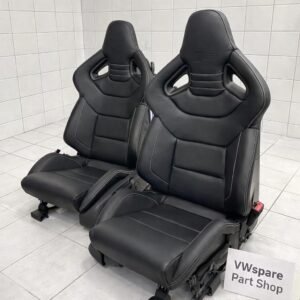
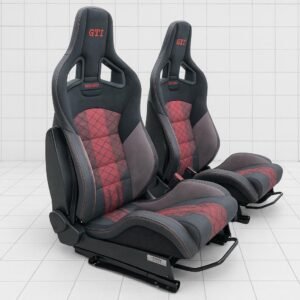
Moreover, the wingback structure is defined by its extended shoulder supports, which rise above the upper bolsters to cradle the torso. This design limits unwanted lateral movement during cornering and directional changes. Consequently, the driver remains centered and supported, which improves steering precision and overall confidence.
In addition, the high side bolsters along the seat base and backrest work together with the shoulder wings to create a cohesive support system. Rather than isolating support to a single area, Recaro distributes restraint evenly across the body. Therefore, pressure points are reduced while stability is increased.
Structural engineering plays a critical role in this balance. The internal frame of the VW Recaro Wingback seats was engineered to provide rigidity without excessive weight. As a result, the seat maintains its shape under dynamic forces while avoiding unnecessary mass that could affect vehicle balance.
Furthermore, the seat shell geometry was refined through extensive testing. Recaro evaluates torsional rigidity, flex behavior, and vibration response to ensure consistent support. Consequently, the Wingback design delivers predictable performance rather than variable comfort.
The integrated headrest is another defining feature of the Wingback architecture. Unlike adjustable headrests that can shift or loosen over time, the fixed structure enhances structural integrity. Therefore, upper-body alignment remains consistent during spirited driving and sudden directional changes.
In addition, the wingback form supports proper shoulder positioning. By guiding the upper torso into a stable posture, the seat improves steering input and reduces compensatory muscle tension. As a result, drivers experience greater control with less fatigue.
The seat’s side bolsters were shaped to accommodate a range of body types without sacrificing support. Instead of aggressive confinement, the design emphasizes adaptive contact. Consequently, the VW Recaro Wingback seats remain comfortable for daily use while still delivering performance-level restraint.
Moreover, ingress and egress were considered during the design process. Although the Wingback seat offers pronounced support, the contours allow drivers to enter and exit without excessive effort. Therefore, everyday usability remains intact despite the performance-focused structure.
The Wingback design also supports proper harness and seatbelt interaction where applicable. Structural alignment ensures that restraint systems function as intended. As a result, safety and performance objectives align rather than conflict.
In addition, Recaro engineered the seat to maintain consistent geometry over time. Materials and internal reinforcement resist deformation caused by repeated loading. Consequently, long-term support remains stable rather than diminishing.
From a visual perspective, the Wingback design communicates motorsport intent without overwhelming the cabin. The sculpted shoulders and clean lines reinforce performance heritage while maintaining OEM-level refinement. Therefore, the seats enhance interior character without appearing out of place.
Ultimately, Section 2 establishes that the VW Recaro Wingback seats are defined by purposeful design and disciplined structural engineering. Through shoulder support, balanced bolstering, and rigid yet lightweight construction, the Wingback architecture delivers tangible performance benefits alongside everyday comfort. As a result, the seats serve drivers who expect their seating position to actively support control, focus, and long-term driving enjoyment.
Materials, Upholstery, and Craftsmanship Excellence volkswagen bus
Materials and craftsmanship define the long-term value of performance seating, and the VW Recaro Wingback seats were developed with this principle firmly in mind. Rather than prioritizing appearance alone, Recaro selected materials that support durability, comfort, and consistent performance under repeated use. As a result, these seats maintain their structure and refinement across years of driving.
Moreover, material selection begins with the seat frame and internal support elements. High-strength structures were engineered to provide rigidity while minimizing unnecessary weight. Consequently, the seats deliver stability without negatively affecting vehicle balance or driving dynamics.
In addition, foam composition plays a critical role in comfort and support. Recaro utilizes multi-density foam layering to balance firmness with pressure relief. Therefore, the seat provides strong lateral support while remaining comfortable during extended driving sessions.
Upholstery options further enhance both tactile quality and durability. Premium fabrics, leather, and performance-oriented materials are selected to withstand daily wear, temperature variation, and friction. As a result, surfaces retain their appearance and texture even with frequent entry and exit.
Furthermore, stitching quality reflects Recaro’s attention to detail. Reinforced seams are positioned to manage stress points without compromising visual refinement. Consequently, upholstery remains secure and visually consistent over time.
Breathability also influences material choice. Performance seating must manage heat and moisture effectively to maintain comfort. Therefore, Recaro incorporates materials that support airflow and thermal regulation, which improves comfort during longer drives.
In addition, surface finishes are treated to resist fading and premature aging. Exposure to sunlight and interior heat was considered during development. As a result, the VW Recaro Wingback seats preserve their premium appearance under normal conditions.
Craftsmanship extends beyond visible elements. Internal bonding, alignment, and assembly processes are executed with strict tolerances. Consequently, each seat maintains consistent geometry and support characteristics.
Moreover, Recaro’s manufacturing process emphasizes repeatability and quality assurance. Each production stage includes inspection protocols designed to identify deviations early. Therefore, unit-to-unit consistency remains high.
Attention was also given to how materials interact over time. Foam resilience, upholstery tension, and structural integrity were tested under simulated long-term use. As a result, the seat’s performance profile remains stable rather than degrading unevenly volkswagen parts.
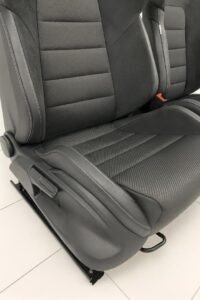
In addition, material compatibility with safety systems was considered. Upholstery and internal components were selected to work harmoniously with seatbelt and airbag systems where applicable. Consequently, safety integration remains intact.
Visual refinement complements structural quality. Clean seams, precise panel alignment, and consistent texture reinforce the premium character of the seats. Therefore, they elevate the interior without appearing excessive or out of place.
Moreover, craftsmanship supports ease of maintenance. Materials were chosen to allow cleaning without specialized products. As a result, owners can preserve appearance with routine care.
The VW Recaro Wingback seats also benefit from Recaro’s decades of supplier relationships. These partnerships ensure access to high-quality raw materials and consistent production standards. Consequently, long-term reliability is reinforced at every stage.
In addition, material durability contributes directly to perceived value. Seats that maintain comfort and appearance over time enhance ownership satisfaction. Therefore, the investment delivers lasting returns.
Ultimately, Section 3 establishes that the VW Recaro Wingback seats are defined by disciplined material selection and meticulous craftsmanship. Through premium upholstery, multi-density foam, reinforced construction, and rigorous quality control, these seats deliver enduring comfort, performance, and refinement. As a result, they stand as a premium interior upgrade for drivers who expect excellence beyond initial impressions.
Ergonomics, Driving Comfort, and Everyday Usability
Ergonomics represent the foundation of the VW Recaro Wingback seats, shaping how drivers interact with the vehicle over both short and extended periods. Rather than treating comfort as a secondary benefit, Recaro engineered these seats around human biomechanics, posture alignment, and sustained support. As a result, comfort and control are delivered simultaneously rather than traded against one another.
Moreover, the seating position was designed to support a neutral driving posture. The seat base, backrest angle, and lumbar contour work together to align the spine naturally. Consequently, muscle strain is reduced during long drives, which improves overall comfort and focus.
In addition, thigh support plays a critical role in ergonomic balance. The VW Recaro Wingback seats provide adequate leg support without restricting circulation. Therefore, drivers experience less fatigue in the lower body during extended highway or city driving.
The backrest geometry further enhances everyday usability. By supporting the upper and lower back evenly, the seat reduces pressure concentration. As a result, posture remains stable even during stop-and-go traffic or prolonged cruising.
Furthermore, lateral bolstering is calibrated to support the body without excessive confinement. While the Wingback design delivers strong side support, it remains forgiving enough for daily entry, exit, and repositioning. Consequently, the seats feel practical rather than demanding.
Head and shoulder alignment also influence long-term comfort. The integrated wingback shoulders guide the upper body into a stable position, which reduces unnecessary tension in the neck and shoulders. Therefore, drivers maintain comfort during longer sessions behind the wheel.
In addition, vibration management contributes to ergonomic quality. Seat materials and internal structure absorb road imperfections and drivetrain feedback. As a result, harsh vibrations are reduced without disconnecting the driver from the road.
The VW Recaro Wingback seats also support consistent pedal and steering interaction. Because the driver remains securely positioned, control inputs feel more precise. Consequently, everyday driving becomes more relaxed and predictable.
Moreover, these seats accommodate a wide range of driving scenarios. Whether navigating urban environments, commuting long distances, or enjoying spirited weekend drives, the ergonomic design adapts without adjustment. Therefore, versatility becomes a defining strength.
Ease of ingress and egress further reinforces usability. Although performance-oriented, the seat contours allow drivers to enter and exit without discomfort. As a result, the seats integrate naturally into daily routines.
In addition, long-term comfort supports safety. When drivers remain comfortable, attention and reaction time improve. Consequently, ergonomic seating contributes indirectly to overall driving confidence.
The seating surface also supports even weight distribution. By minimizing pressure points, the seat maintains comfort across varying body types. Therefore, usability extends to a broad range of drivers.
Moreover, ergonomic refinement reduces the need for constant adjustment. Once positioned correctly, the seat maintains comfort throughout the drive. As a result, distraction is minimized VW seats VW Recaro Wingback.
From a lifestyle perspective, the VW Recaro Wingback seats strike a balance between performance and practicality. They enhance driving engagement without compromising comfort during everyday use. Consequently, drivers enjoy both spirited performance and relaxed cruising VW seats VW Recaro Wingback.
Ultimately, Section 4 demonstrates that the VW Recaro Wingback seats deliver comprehensive ergonomic benefits alongside daily usability. Through posture alignment, balanced support, vibration management, and practical contours, these seats support comfort across every driving scenario. As a result, they appeal to drivers who expect performance seating to enhance, rather than complicate, everyday driving VW seats VW Recaro Wingback.
Performance Driving Benefits, Control, and Track Influence volkswagen car
Performance driving places unique demands on seating, and the VW Recaro Wingback seats were engineered to meet those demands without sacrificing everyday usability. Rather than serving as a passive place to sit, the seat functions as a critical interface that connects the driver to the vehicle’s dynamics. As a result, control, confidence, and consistency improve across a wide range of driving conditions VW seats VW Recaro Wingback.
Moreover, lateral support is a defining advantage during spirited driving. The pronounced side bolsters and wingback shoulders work together to limit unnecessary body movement during cornering. Consequently, the driver remains centered, which reduces the need to brace against the steering wheel or door panel volkswagen car. This stability allows steering inputs to remain precise and intentional VW seats VW Recaro Wingback.
In addition, the Wingback architecture supports braking performance. Under heavy deceleration, the seat maintains upper-body alignment and prevents forward shift. Therefore, pedal modulation feels more controlled, and braking inputs remain consistent even during aggressive driving VW seats VW Recaro Wingback.
Throttle application also benefits from improved seating stability. Because the driver’s hips and torso are securely supported, lower-body movement is minimized. As a result, throttle control becomes smoother and more predictable, particularly when exiting corners VW seats VW Recaro Wingback.
Furthermore, the seats enhance driver feedback. When the body is properly supported, subtle chassis and road signals become easier to interpret. Consequently, drivers can sense grip levels, weight transfer, and traction changes with greater clarity. This feedback loop strengthens confidence during performance driving VW seats VW Recaro Wingback.
Track influence is evident throughout the design. Recaro’s motorsport experience informed the bolstering geometry, shoulder support height, and seat shell rigidity. Therefore, the VW Recaro Wingback seats share DNA with competition seating while remaining suitable for road use.
In addition, the integrated headrest and wingback shoulders improve helmet compatibility in track environments. Upper-body stability remains consistent even when wearing additional gear. As a result, the seating position continues to support control rather than compromise it.
Heat management also plays a role during performance driving. Materials and foam density were selected to maintain comfort during extended sessions. Consequently, the seat remains supportive without becoming uncomfortable as temperatures rise.
Moreover, reduced driver fatigue directly impacts performance. When the body is held securely, muscles remain relaxed rather than constantly compensating for movement. Therefore, focus and reaction time are preserved during longer or more demanding drives volkswagen bus.
The VW Recaro Wingback seats also support repeatable performance. Because seating position remains consistent, drivers can develop muscle memory for steering, braking, and throttle inputs. As a result, driving becomes more intuitive over time VW seats VW Recaro Wingback.
In addition, the seat’s rigidity contributes to consistent control. Flex and deformation were minimized to prevent changes in posture under load. Consequently, support remains predictable during high-G maneuvers VW seats VW Recaro Wingback.
Performance benefits extend beyond the track. On winding roads or during enthusiastic driving, the same principles apply. Therefore, drivers experience improved confidence and enjoyment even outside controlled environments VW seats VW Recaro Wingback.
Moreover, the seats reduce reliance on secondary bracing. Because support is built into the seating position, drivers avoid gripping the wheel excessively or tensing muscles unnecessarily. As a result, steering remains smoother and more deliberate VW seats VW Recaro Wingback.
The Wingback design also complements performance-focused suspension and chassis tuning. As vehicle response sharpens, the seat ensures the driver remains in sync with those changes. Consequently, the overall driving experience feels cohesive rather than fragmented VW seats VW Recaro Wingback.
In addition, stability during transitions—such as rapid left-to-right direction changes—is enhanced. The shoulder wings and bolsters manage lateral load efficiently. Therefore, control is maintained even during aggressive maneuvers VW seats VW Recaro Wingback.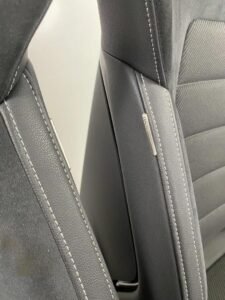
Ultimately, Section 5 establishes that the VW Recaro Wingback seats deliver tangible performance advantages rooted in motorsport influence and ergonomic discipline. Through enhanced lateral support, improved feedback, reduced fatigue, and consistent driver positioning, these seats elevate both track performance and spirited road driving. As a result, they appeal to drivers who expect seating to actively contribute to control, precision, and driving enjoyment rather than simply provide comfort.
Reviews
There are no reviews yet.