
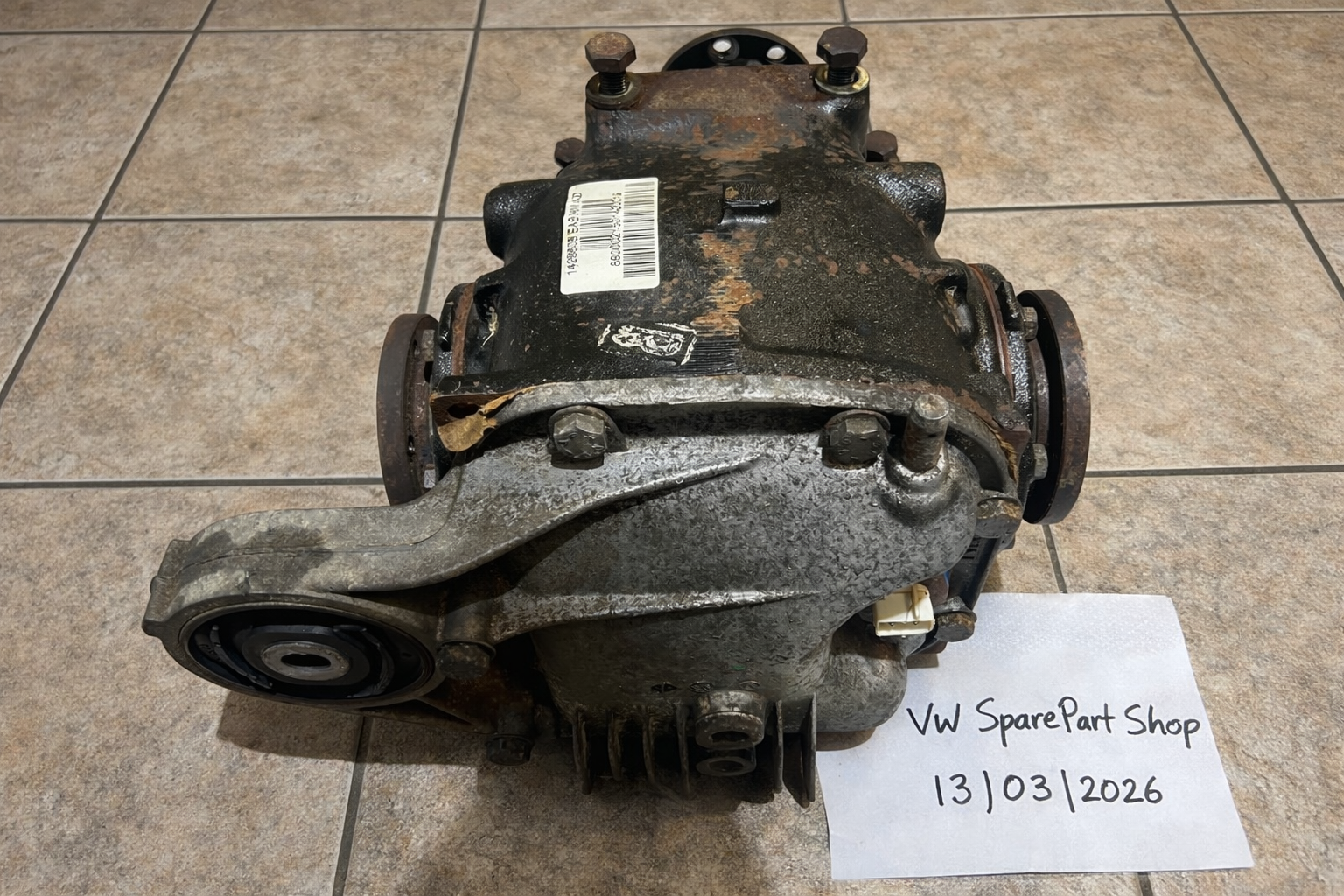
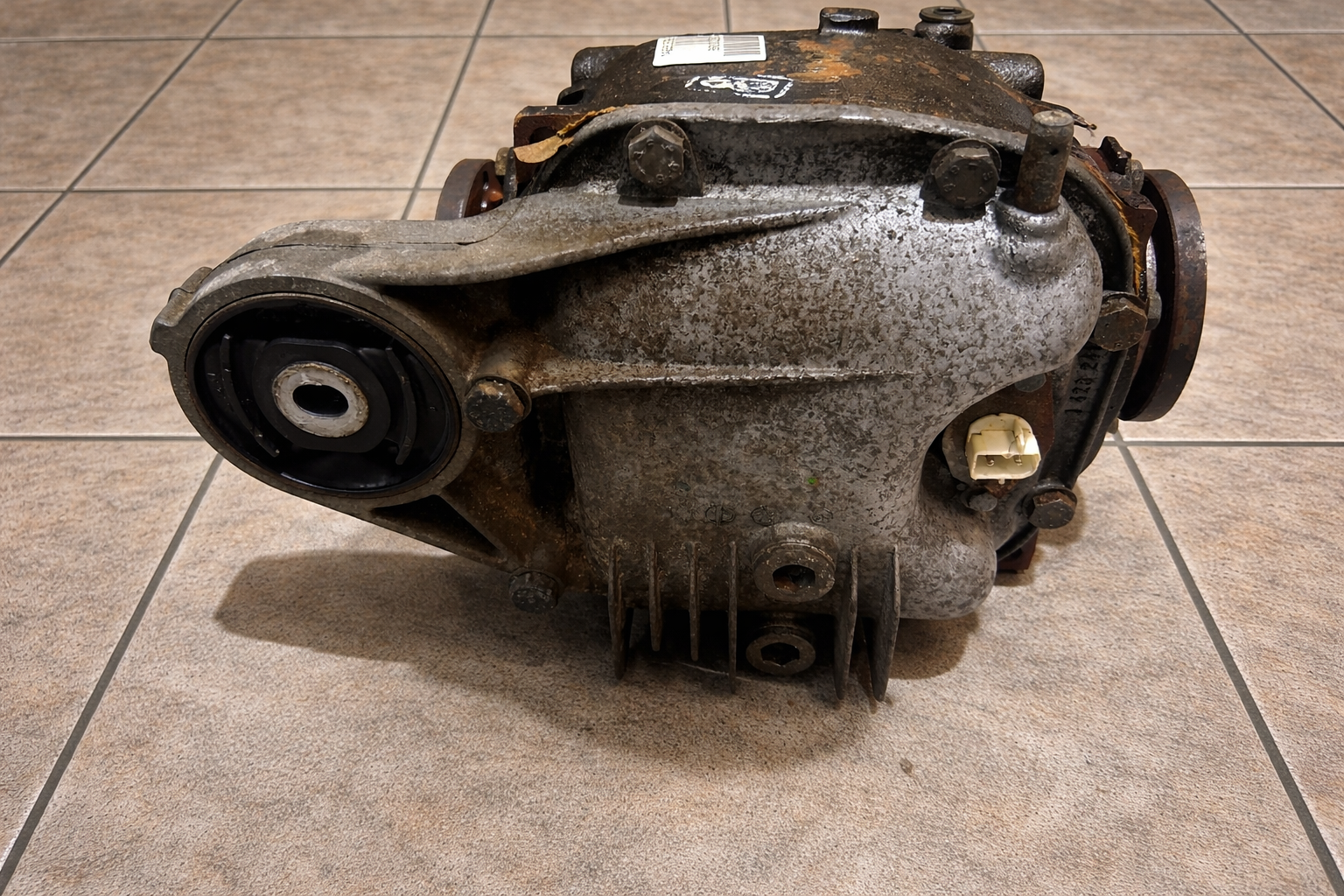
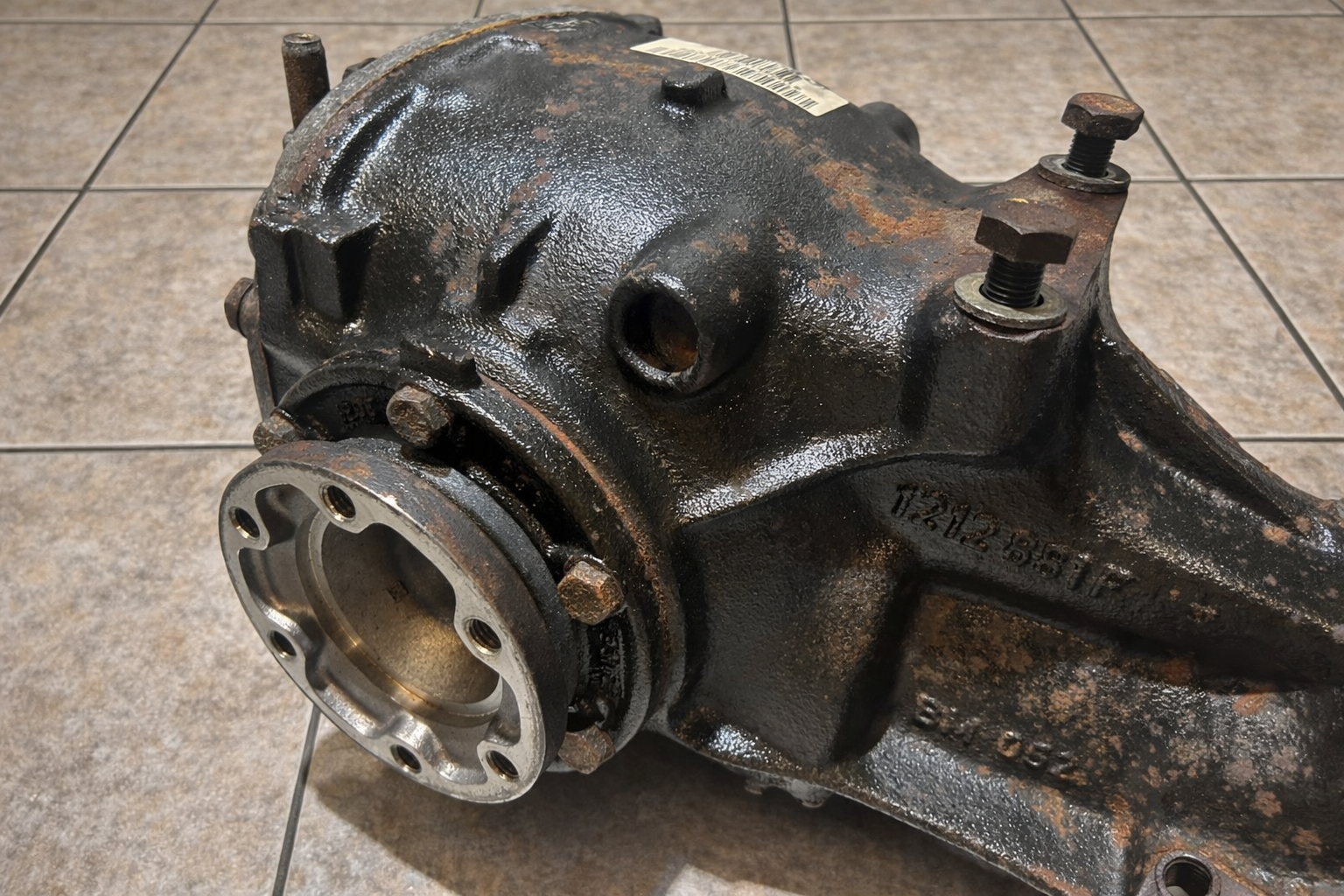

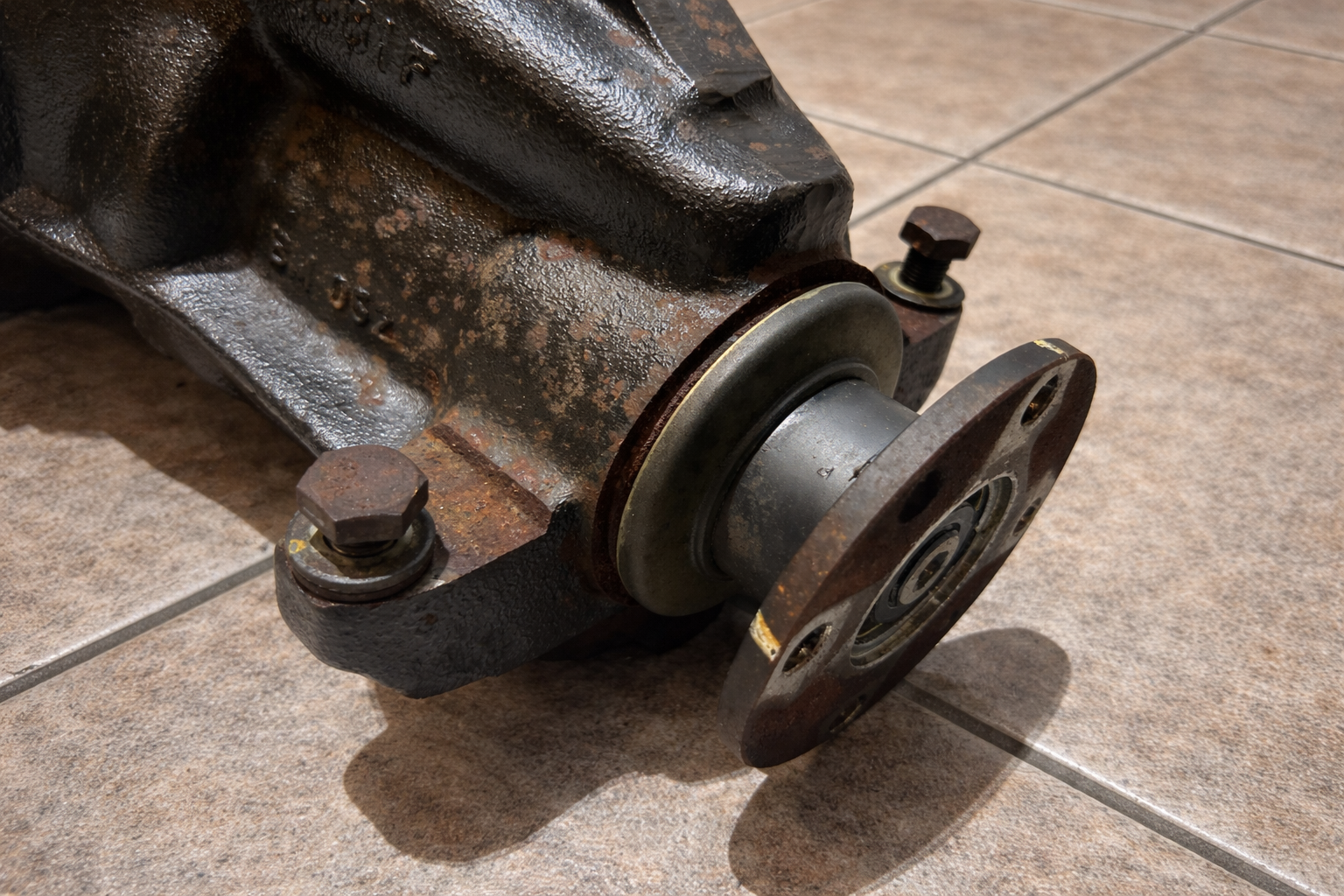
1998-2000 BMW Z3 2.3 2.8 Open Differential / 4.27 / Automatic / 58K Z3036

€380.00
1998-2000 BMW Z3 2.3 2.8 Open Differential / 4.27 / Automatic
Donor Car:
2000 BMW Z3 2.3 Roadster – 58K
Functionality:
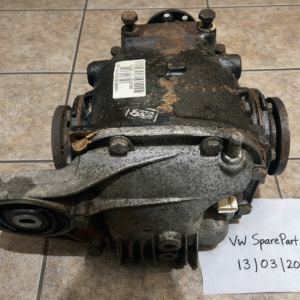
In good working condition, fully tested prior to removal from the vehicle. Differential made no odd noises or grinding or testing. Fluid has been drained with no abnormalities. Will ship drained of fluid.
Physical Condition:
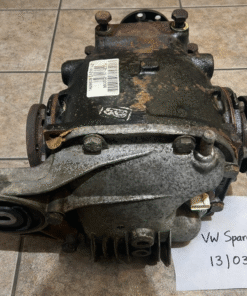
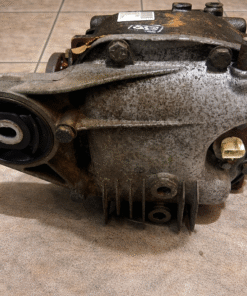
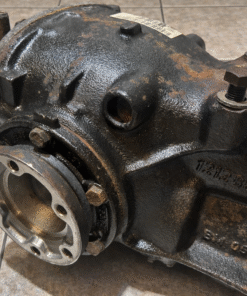
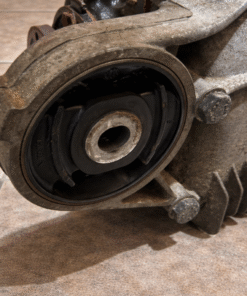
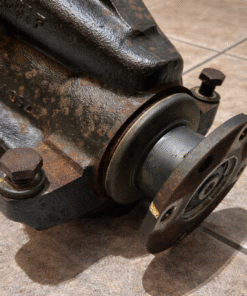
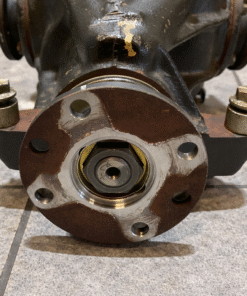
Includes the axles stubs as shown. Housing is in good condition with no damage, however both axle seals had some minor leaks and seeping during testing. We suggest replacing both seals prior to installation. The rubber mount is in good usable condition with no rips or tears. You will need to reuse some of your existing hardware for installation.
Fits:
1999, 2000 BMW Z3 2.3 (w/ automatic transmission)
1998, 1999, 2000 BMW Z3 2.8 (w/ automatic transmission)
Fitment Notes:
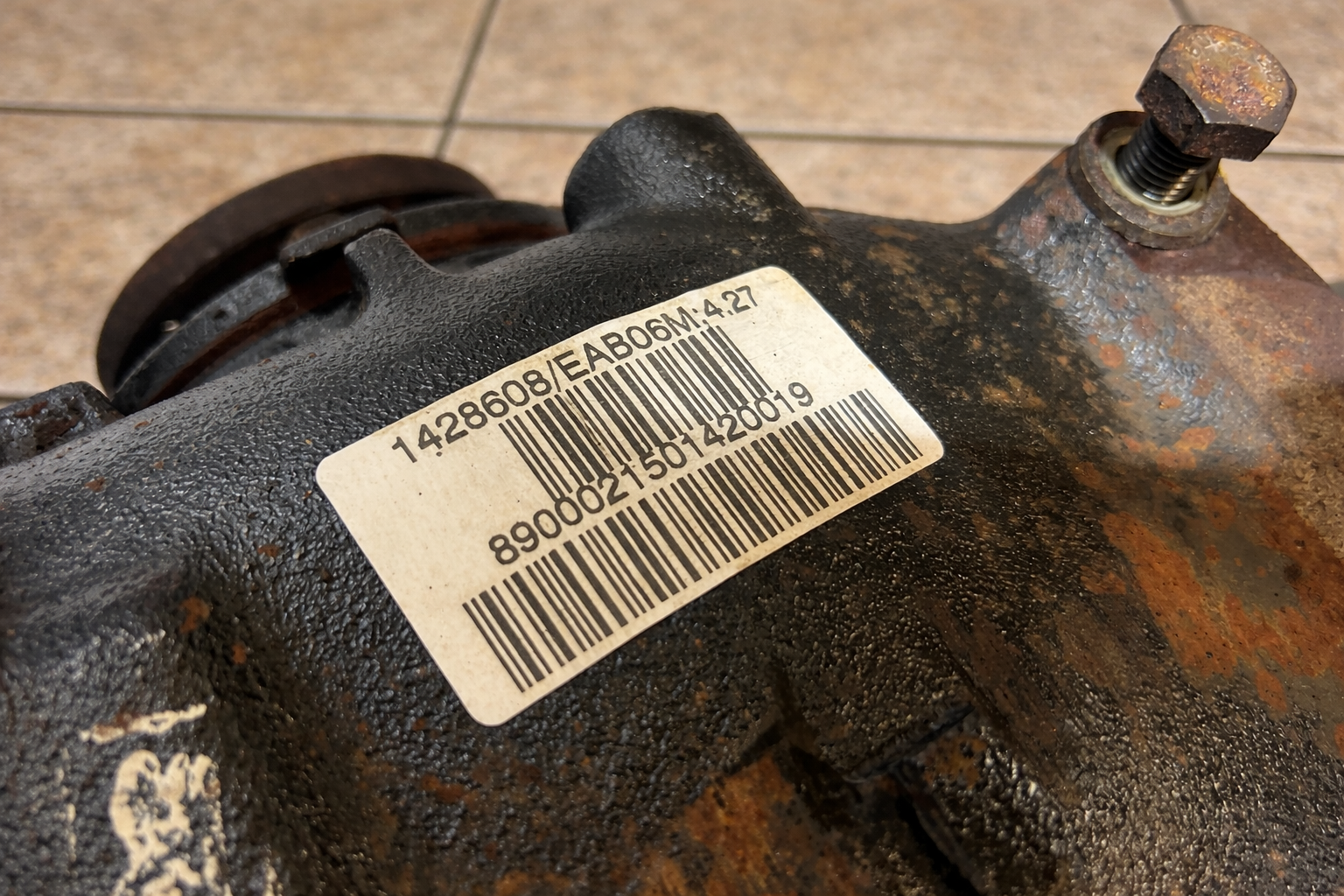
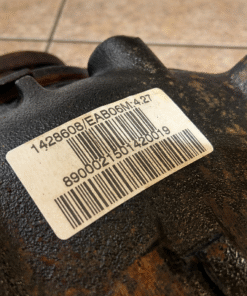
Removed from a 2000 BMW Z3 2.3 Roadster with an automatic transmission. This has the 4.27 final drive ratio, Please confirm this matches your existing differential prior to purchase.
1998–2000 BMW Z3 2.3 2.8 Open Differential / 4.27 / Automatic / 58K Z3036 – Premium Performance Upgrade
Precision Engineering Meets Timeless Performance
Engineered with attention to drivetrain balance, this 1998–2000 BMW Z3 2.3 2.8 Open Differential with 4.27 gear ratio (Automatic, 58K Z3036) has been meticulously curated to deliver optimized torque distribution, smooth acceleration, and enhanced driving responsiveness. Designed specifically for enthusiasts of BMW roadsters, this differential assembly integrates seamlessly into compatible Z3 models, ensuring a refined yet powerful driving experience.BMW Z3 rear axle differential
Moreover, improved drivetrain efficiency is achieved through precision gearing, while consistent power delivery is ensured across varying driving conditions. Additionally, performance integrity is maintained due to its low mileage (58K), making it an excellent choice for restoration projects, upgrades, or OEM replacements.BMW Z3 rear axle differential
Why This BMW Z3 Differential Stands Out
Enhanced drivability is experienced when the correct differential ratio is paired with your transmission system. In this case, a 4.27 ratio has been optimized for automatic configurations, allowing quicker acceleration while maintaining stability at cruising speeds.
Furthermore, compatibility with 1998–2000 BMW Z3 2.3 and 2.8 models ensures straightforward installation. As a result, mechanical integration becomes more efficient, reducing downtime and labor complexity.BMW Z3 rear axle differential
Key Advantages Include:
- Improved acceleration response due to optimized 4.27 gear ratio
- Seamless compatibility with automatic transmission systems
- Reduced drivetrain strain through balanced torque distribution
- Enhanced reliability due to low mileage usage (58K miles)
- OEM-grade engineering aligned with BMW performance standards
Technical Specifications
Core Product Details
- Vehicle Compatibility: 1998–2000 BMW Z3 2.3 / 2.8
- Differential Type: Open Differential
- Gear Ratio: 4.27
- Transmission Compatibility: Automatic
- Mileage: 58,000 miles
- Reference Code: Z3036
Engineering Characteristics
- Precision-machined gears for consistent rotational efficiency
- Durable housing designed for long-term performance
- Balanced torque output for smooth cornering behavior
- Factory-aligned specifications ensuring OEM-level fitment
Performance Benefits Explained
Optimized Gear Ratio for Acceleration
Acceleration performance is significantly influenced by the gear ratio. With a 4.27 differential, torque multiplication is increased, allowing quicker takeoff and improved responsiveness in urban and spirited driving conditions.
Smooth Power Delivery
Power transitions are managed more smoothly due to the open differential design. Consequently, daily driving comfort is enhanced while maintaining predictable handling characteristics.
Ideal for Automatic Transmission Systems
Compatibility with automatic transmissions ensures that gear shifts remain smooth and efficient. Therefore, drivetrain harmony is preserved, reducing wear on transmission components.
Compatibility & Fitment
Supported Models
- 1998 BMW Z3 2.3
- 1999 BMW Z3 2.3 / 2.8
- 2000 BMW Z3 2.3 / 2.8
Fitment has been engineered to align with factory mounting points, ensuring that installation can be performed without extensive modification. However, professional installation is recommended for optimal results.
BMW Z3 rear axle differential Installation Overview
What to Expect During Installation
Installation is typically straightforward when performed by a qualified technician. The following steps are generally involved:
- Removal of the existing differential unit
- Inspection of mounting bushings and hardware
- Installation of the replacement differential
- Alignment and torque calibration
- Fluid refill and system testing
Additionally, proper lubrication must be ensured to maximize performance longevity.
BMW Z3 rear axle differential Ideal Use Cases
Restoration Projects
Classic BMW Z3 models benefit greatly from OEM-spec replacements. Therefore, this differential is ideal for restoring original driving characteristics.
Performance Enhancement
Drivers seeking improved acceleration will find the 4.27 ratio particularly advantageous. As a result, vehicle responsiveness is noticeably upgraded.
Replacement for Worn Units
When an aging differential begins to show signs of wear, performance can degrade. Consequently, replacing it with a low-mileage unit ensures reliability and efficiency.
Condition & Quality Assurance
Low Mileage Advantage
With only 58,000 miles, wear and tear have been minimized. This ensures:
- Longer service life
- Reduced internal component degradation
- Higher reliability compared to high-mileage alternatives
Inspection Standards
Each unit is typically inspected for:
- Gear integrity
- Housing condition
- Fluid contamination
- Noise and vibration performance
Maintenance Recommendations
Routine Care Guidelines
- Use manufacturer-recommended differential fluid
- Perform periodic inspections for leaks or unusual noise
- Replace fluid at regular intervals to maintain lubrication efficiency
Additionally, proactive maintenance ensures sustained performance and prevents premature wear.
Comparison: Open vs Limited Slip Differential
Open Differential Benefits
- Cost-effective solution
- Smooth operation for everyday driving
- Lower maintenance requirements
When It’s the Right Choice
Open differentials are ideal for standard road use, where traction demands are moderate. Therefore, this unit is perfectly suited for daily driving and casual performance needs.
Advanced Technical Insights & Buyer-Centric Breakdown
Understanding Differential Functionality in the BMW Z3
Power distribution across the rear axle is fundamentally controlled by the differential. In this 1998–2000 BMW Z3 2.3 2.8 Open Differential / 4.27 / Automatic / 58K Z3036, rotational force is allocated efficiently between the rear wheels, allowing smooth cornering and controlled traction.
Furthermore, torque is distributed evenly under normal driving conditions. As a result, predictable handling characteristics are achieved, especially during everyday driving scenarios.
Additionally, mechanical simplicity is preserved through the open differential design, ensuring fewer internal components are subjected to excessive wear.
How the 4.27 Gear Ratio Transforms Driving Dynamics
Acceleration Behavior Enhancement
Acceleration curves are significantly influenced by gear ratio selection. With a 4.27 ratio, torque multiplication is increased, enabling:
- Faster throttle response
- Improved low-end acceleration
- Enhanced urban driving agility
Consequently, drivers experience quicker launches and more responsive pedal input.
BMW Z3 low mileage differential Highway Driving Considerations
Although acceleration is prioritized, highway stability remains consistent. Engine RPM levels may be slightly higher; however, drivetrain balance is maintained.BMW Z3 low mileage differential
Therefore, both city and highway driving conditions are accommodated effectively.
Engineering Breakdown: Internal Component Design
Gear Construction
High-strength steel gears are utilized to ensure durability. Precision machining is applied to maintain tight tolerances, which results in:
- Reduced friction
- Lower heat generation
- Extended component lifespan
Bearing System
Load-bearing components are designed to support rotational forces under varying conditions. Consequently, smoother operation is achieved even under stress.
Housing Integrity
The differential casing is engineered to withstand environmental exposure and mechanical stress. Additionally, structural rigidity is maintained to prevent deformation.
Real-World Driving Scenarios
Daily Driving Experience
Urban driving becomes smoother due to consistent torque delivery. Stop-and-go traffic is handled efficiently, while throttle response remains predictable.
Spirited Driving
Enthusiasts seeking a more engaging driving experience will benefit from the increased acceleration capability. Corner exits feel more responsive due to improved torque transfer.
Long-Distance Travel
Despite its performance-oriented ratio, the differential maintains stability during extended drives. Therefore, comfort and efficiency are preserved over long distances.BMW Z3 low mileage differential
Signs You Need a Differential Replacement
Over time, differential components may degrade. The following indicators suggest replacement may be necessary:
- Whining or humming noises from the rear axle
- Vibrations during acceleration
- Fluid leaks around the differential housing
- Uneven tire wear patterns
Replacing worn components with a low-mileage 58K unit ensures restored performance and reliability.
Benefits of Choosing a Low-Mileage Differential
Reduced Wear and Tear
Lower mileage means internal gears and bearings have experienced less stress. As a result, longevity is significantly improved.BMW Z3 low mileage differential
Higher Reliability
Failure risks are minimized when components are less worn. Therefore, confidence in performance is increased.
Cost Efficiency
Compared to brand-new units, this option offers OEM-level performance at a more accessible price point.
Ideal Use Cases for the 1998–2000 BMW Z3 2.3 2.8 Open Differential / 4.27 / Automatic / 58K Z3036
Selecting the correct differential is not only about compatibility—it is also about aligning the component with your driving intent. This 1998–2000 BMW Z3 differential has been engineered to support a range of real-world applications, while consistent performance and reliability are maintained across different driving environments.BMW Z3 2.8 rear differential
BMW Z3 2.8 rear differential Daily Driving Optimization
Smooth operation is prioritized when this differential is used in everyday driving conditions. Because torque is distributed evenly, predictable handling is achieved during:
- City commuting
- Stop-and-go traffic
- Short-distance trips
Additionally, drivetrain stress is reduced, which contributes to long-term reliability. As a result, drivers seeking comfort and consistency will benefit significantly.BMW Z3 2.8 rear differential
Performance-Oriented Street Driving
Acceleration gains are most noticeable when the 4.27 gear ratio is utilized in spirited driving scenarios. Therefore, this differential is ideal for:
- Quick launches from a standstill
- Responsive throttle input
- Enhanced corner exit acceleration
Moreover, driving engagement is increased without compromising overall stability. Enthusiasts who enjoy dynamic road performance will find this setup highly rewarding.BMW Z3 low mileage differential
BMW Z3 Restoration Projects
Restoring a classic BMW Z3 requires components that match original specifications. Because this unit maintains OEM alignment, it is perfectly suited for:
- Factory-correct restorations
- Period-accurate rebuilds
- Replacement of worn or damaged differentials
Consequently, original driving characteristics can be preserved or fully restored.
Replacement for High-Mileage or Failing Units
Over time, differentials experience wear that affects performance. When symptoms such as noise or vibration appear, this low-mileage (58K) unit becomes an ideal replacement.
Common replacement scenarios include:
- Worn gears causing whining sounds
- Fluid leaks indicating seal failure
- Reduced traction efficiency
- Vibrations under acceleration
Thus, reliability is restored while future mechanical issues are minimized.
Automatic Transmission Optimization
Because this differential has been specifically matched to automatic configurations, drivetrain harmony is improved. Gear transitions remain smooth, while power delivery stays consistent.
This makes it particularly suitable for:
- Drivers prioritizing ease of use
- Vehicles with stock automatic transmissions
- Balanced daily and performance driving
Budget-Friendly Performance Upgrade
Performance improvements are often associated with high costs. However, this differential provides a cost-effective alternative to expensive aftermarket upgrades.
Therefore, it is ideal for:
- Enthusiasts seeking affordable performance gains
- Drivers upgrading without extensive modifications
- Owners looking for OEM-level improvements
Weekend & Leisure Driving
For drivers who use their Z3 as a weekend or leisure vehicle, responsiveness and smoothness are equally important. Because this unit enhances both, it fits perfectly into:
- Scenic drives
- Casual performance outings
- Enthusiast meetups and events
Frequently Asked Questions (FAQ)
1998–2000 BMW Z3 2.3 2.8 Open Differential / 4.27 / Automatic / 58K Z3036
Clear answers are often expected before a purchase decision is made. Therefore, the following FAQ section has been structured to address both technical concerns and buyer intent while improving SEO depth and conversion potential.
BMW Z3 2.3 2.8 Open Differential General Compatibility Questions
Is this differential compatible with all BMW Z3 models?
Compatibility is specifically aligned with 1998–2000 BMW Z3 2.3 and 2.8 models. However, fitment should always be verified using VIN or part number matching before purchase.BMW Z3 2.3 2.8 Open Differential
Can this be installed in a manual transmission Z3?
Although installation may be physically possible, this unit has been optimized for automatic transmission systems. Therefore, performance results may vary in manual configurations.
Does this fit other BMW models?
This differential has been designed primarily for the BMW Z3 platform. Cross-model compatibility is not guaranteed unless specifications match exactly.BMW Z3 2.8 rear differential
BMW Z3 2.8 rear differential Performance & Functionality Questions
What difference does a 4.27 gear ratio make?
Acceleration is increased because torque is multiplied more aggressively. As a result, quicker launches and improved responsiveness are achieved, especially in city driving conditions.
Will this improve my car’s performance?
Yes, performance improvements are typically experienced in acceleration and throttle response. However, overall results depend on vehicle condition and maintenance.
Does this affect fuel economy?
Fuel consumption may slightly increase due to higher engine RPM at cruising speeds. However, the difference is usually minimal for most drivers.BMW Z3 automatic differential 4.27
What type of differential is this?
This is an open differential, meaning power is distributed evenly but not actively shifted between wheels for traction enhancement.
Condition & Quality Questions
What does 58K mileage mean for this differential?
Lower mileage indicates reduced wear on internal components. Consequently, longer lifespan and improved reliability are expected compared to high-mileage units.
Has this differential been tested?
Typically, such units are inspected for:
- Gear wear and integrity
- Noise and vibration performance
- Housing condition
- Fluid contamination
Is this a rebuilt or used unit?
This is a used OEM differential with low mileage, not a remanufactured unit unless otherwise specified.
Installation Questions
Is professional installation required?
Professional installation is strongly recommended. Proper alignment and torque calibration must be ensured to avoid premature wear or failure.
How long does installation take?
Installation time generally ranges from 2 to 4 hours, depending on technician experience and vehicle condition.
Are additional parts required for installation?
In some cases, supporting components may be recommended:
- New mounting bushings
- Fresh differential fluid
- Replacement seals if needed
Maintenance Questions
What type of fluid should be used?
High-quality gear oil that meets manufacturer specifications should be used to ensure optimal lubrication and performance.
How often should the differential fluid be changed?
Fluid replacement intervals vary; however, it is commonly recommended every 30,000–60,000 miles depending on driving conditions.BMW Z3 2.3 2.8 Open Differential
BMW Z3 2.3 2.8 Open Differential How can longevity be maximized?
Longevity is improved when:
- Proper lubrication is maintained
- Aggressive driving is moderated
- Regular inspections are performed
BMW Z3 2.3 2.8 Open Differential Buyer Decision Questions
Who is this differential best suited for?
This unit is ideal for:
- Daily drivers seeking reliability
- Enthusiasts wanting improved acceleration
- Owners restoring a BMW Z3
- Drivers replacing worn differentials
Is this a good upgrade over stock?
Yes, especially if the original differential has a lower gear ratio. Improved responsiveness will typically be noticed immediately.BMW Z3 automatic differential 4.27
What are the advantages over a limited-slip differential?
Open differentials offer:
- Lower cost
- Simpler maintenance
- Smooth everyday driving behavior
However, limited-slip differentials provide better traction in performance scenarios.
Shipping & Purchase Questions
Is this ready to install upon delivery?
The unit is generally ready for installation; however, fluid replacement and inspection are recommended before use.
How should this differential be handled during shipping?
Proper packaging ensures protection from:
- Physical damage
- Contamination
- Moisture exposure
What should be checked upon arrival?
Upon delivery, the following should be inspected:
- Housing condition
- Mounting points
- Signs of leakage
- Overall structural integrity
Installation Guide
1998–2000 BMW Z3 2.3 2.8 Open Differential / 4.27 / Automatic / 58K Z3036
Proper installation is critical to ensure optimal drivetrain performance and long-term reliability. Therefore, a structured approach should always be followed so that alignment, torque distribution, and lubrication are correctly achieved.
Pre-Installation Preparation
Before installation begins, several checks should be completed to avoid complications during the process.
Required Tools & Equipment
- Socket and wrench set
- Torque wrench (essential for precision tightening)
- Hydraulic jack and jack stands or vehicle lift
- Drain pan for old fluid
- Pry bar and mounting tools
- Safety gloves and protective eyewear
Pre-Installation Checklist
Preparation is essential because improper setup can lead to premature wear. Therefore, the following steps should be completed:
- Vehicle should be securely elevated and stabilized
- Battery should be disconnected for safety
- Existing differential should be inspected for mounting differences
- Replacement unit should be visually checked for damage or leaks
- Correct gear oil should be prepared in advance
Step-by-Step Installation Process
1. Vehicle Elevation & Safety Setup
The vehicle should be raised using a hydraulic lift or jack stands. Stability must be ensured before any work begins. Consequently, risk of injury is minimized.
2. Removal of the Existing Differential
The original differential is carefully removed by:
- Disconnecting the driveshaft
- Detaching axle shafts from the differential
- Removing mounting bolts and support brackets
- Lowering the unit using controlled support
Additionally, mounting points should be inspected for wear or damage.BMW Z3 automatic differential 4.27
3. Inspection of Supporting Components
Before installing the new unit, surrounding components should be evaluated:
- Bushings should be checked for cracks or wear
- Mounting brackets should be inspected for alignment
- Seals should be evaluated to prevent future leaks
If necessary, worn components should be replaced at this stage.
4. Installation of the Replacement Differential
The 1998–2000 BMW Z3 differential (4.27 ratio) is then positioned and secured:
- Unit is lifted into place carefully
- Mounting bolts are aligned and hand-tightened first
- Torque specifications are applied using a torque wrench
- Driveshaft and axle connections are reattached
Precision during this step ensures proper drivetrain alignment.
5. Fluid Refill
Lubrication is essential for proper operation. Therefore:
- Old fluid should be completely drained (if not already done)
- Manufacturer-recommended gear oil should be added
- Fluid levels should be verified before operation
6. Final Inspection & Testing
Once installation is complete, performance must be validated:
- All bolts should be rechecked for proper torque
- Vehicle should be lowered carefully
- Test drive should be conducted at low speeds first
- Noise, vibration, and responsiveness should be monitored
Gradual testing ensures safe integration of the new differential.
Post-Installation Best Practices
Break-In Period
A short break-in period is recommended so that internal components can settle properly. During this phase:
- Aggressive acceleration should be avoided
- Sudden load changes should be minimized
- Smooth driving habits should be maintained
Maintenance After Installation
To maintain performance over time:
- Fluid levels should be checked periodically
- Differential oil should be replaced at recommended intervals
- Unusual sounds or vibrations should be addressed immediately
Common Installation Mistakes to Avoid
Mistakes can lead to costly repairs. Therefore, attention should be given to avoiding:
- Incorrect torque application on mounting bolts
- Using improper or low-quality gear oil
- Skipping inspection of bushings and seals
- Misalignment of driveshaft connections
Professional vs DIY Installation
DIY Installation
Installation can be performed by experienced individuals with mechanical knowledge. However, proper tools and precision are required.
Professional Installation
Professional installation is recommended because:
- Accurate torque specifications are applied
- Alignment is verified using specialized tools
- Installation time is reduced
- Risk of errors is minimized
Be the first to review “1998-2000 BMW Z3 2.3 2.8 Open Differential / 4.27 / Automatic / 58K Z3036”
Related products
Reviews
There are no reviews yet.